
A cake that rises in the oven and then caves in the middle can feel like a baking disaster. If you are wondering why did my cake sink in the middle, the answer is usually one of a few things: the center was underbaked, there was too much baking powder or baking soda, the oven temperature was off, or the oven door was opened before the cake had set.
The good news is that a sunken cake is usually still good to eat. You can trim the top, fill the dip with frosting, or turn it into a trifle. And the shape of the dip can tell you what went wrong, so your next cake comes out level.

The Quick Answer
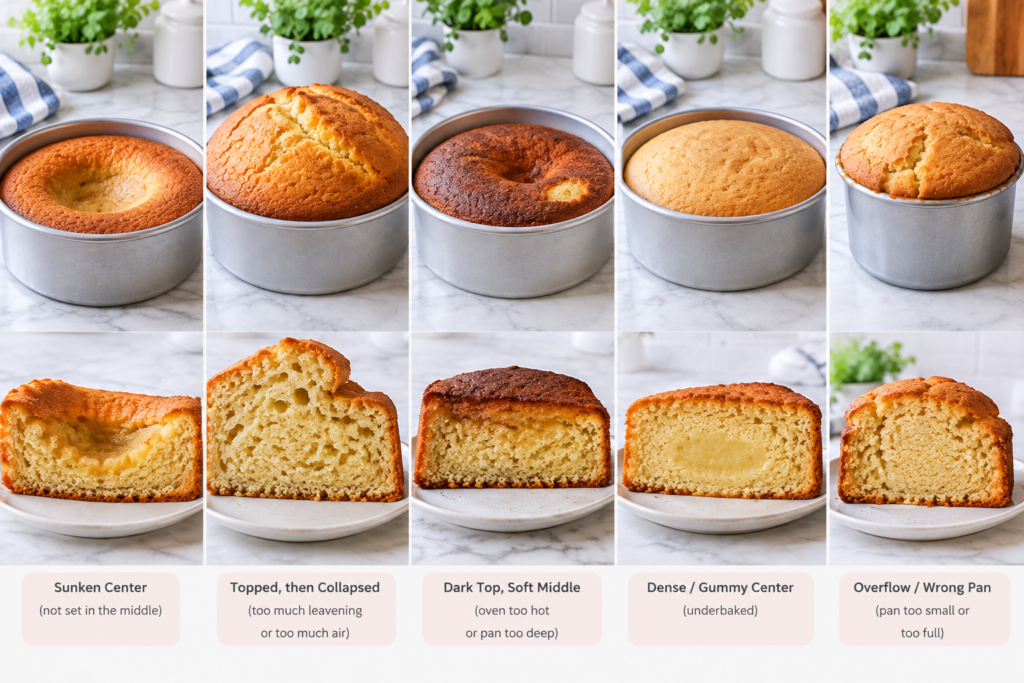
A cake sinks when its center is not strong enough to hold the air and steam that made it rise. Match what you see to the likely cause below before you change your recipe.
| What you noticed | Likely cause | What to change next time |
|---|---|---|
| The cake fell as it cooled and the center looks wet or gummy | Underbaking | Bake until the center springs back and a toothpick shows no wet batter |
| It rose very high, then collapsed | Too much baking powder or soda, or too much air beaten in | Measure raising agents level and follow the mixing times |
| The top set fast but the middle stayed soft | Oven too hot, or batter too deep | Check the oven with a thermometer and use the right pan size |
| It sank right after you opened the oven | The cake had not set yet | Keep the door closed until the cake is mostly set |
| The same recipe sinks every time | Recipe balance or method | Weigh ingredients and follow the recipe exactly |
Why Cakes Sink in the Middle
Cake batter starts out soft. In the oven, air bubbles and steam expand and push the batter up. At the same time, the eggs and the starch in the flour slowly firm up and lock that shape in place.
If the cake rises faster than it can set, or the center is still soft when the cake comes out, the middle has nothing to hold it up and it falls. A very small dip is normal for some cakes. A deep crater, a wet center or a dense gummy band means something is worth fixing.
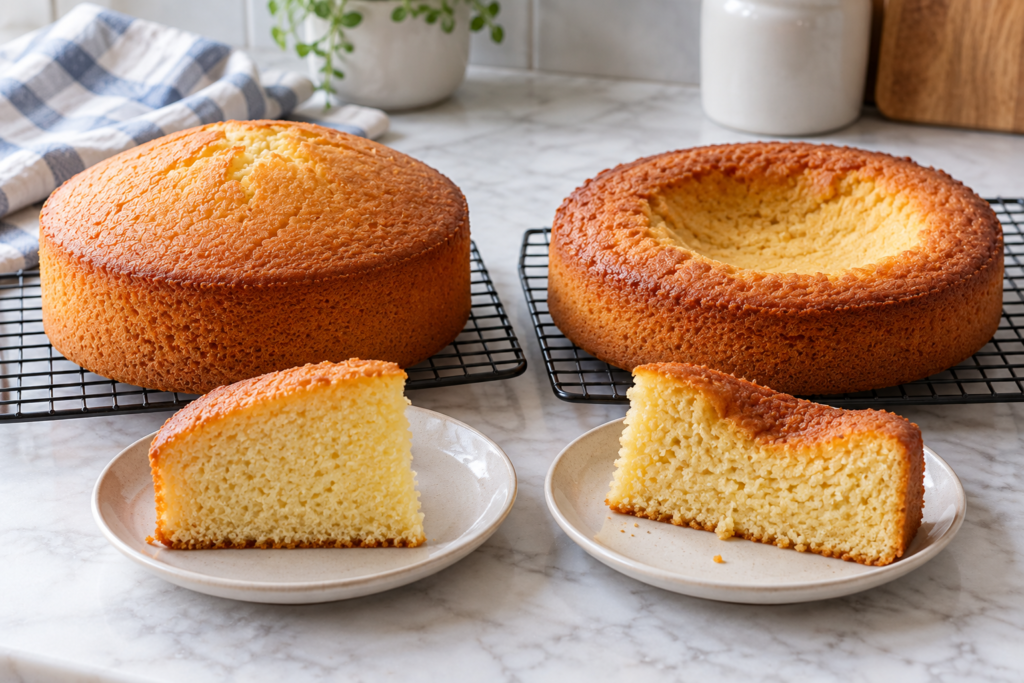
The 6 Most Common Causes and Fixes
1. The Cake Was Underbaked
The center is always the last part of a cake to bake. The edges can look golden and pull away from the pan while the middle is still soft, and then the cake sinks as it cools.
Look for: a wet or sticky center, a shiny line through the crumb, or a dip that forms while the cake cools.
Fix: bake a few minutes longer and check again. The center should spring back when you press it lightly, and a toothpick should come out with no wet batter. A few moist crumbs are fine.
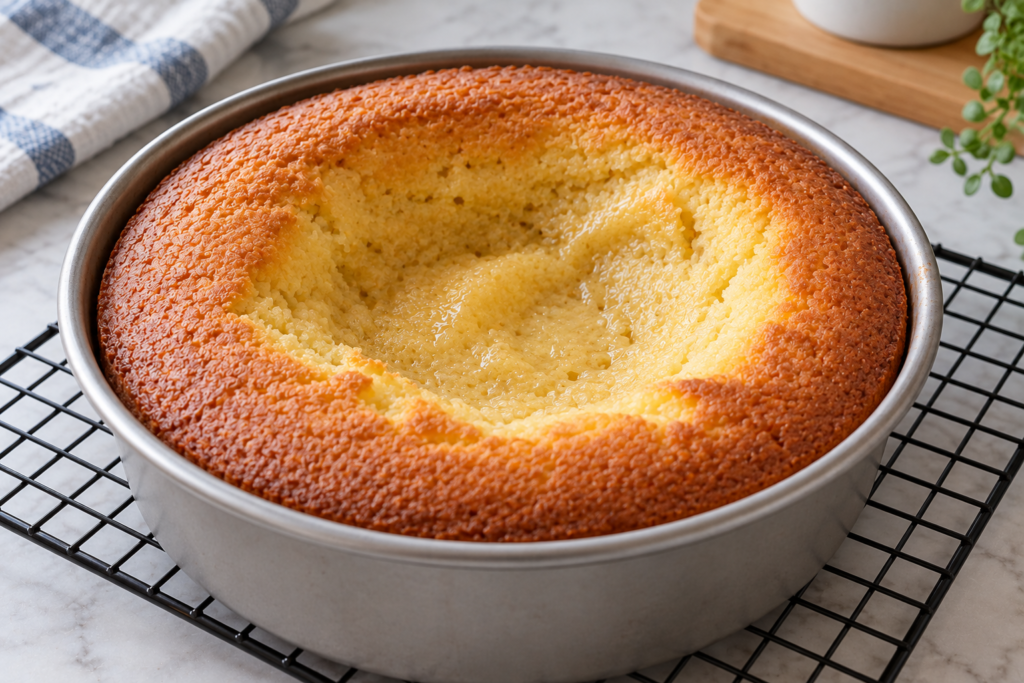
2. You Used Too Much Baking Powder or Baking Soda
Raising agents help a cake rise, but more is not better. Too much makes the batter shoot up quickly, and the bubbles grow bigger than the cake can support. The center then falls, either in the oven or soon after.
Look for: a tall dome that drops, large holes or tunnels, or a coarse crumb.
Fix: use level measuring spoons, or weigh the raising agents if your recipe gives grams. Never add an extra spoonful to make a cake taller. If you use self-rising flour, do not add more baking powder unless the recipe tells you to.
3. The Oven Temperature Was Wrong
An oven that runs cool slows down setting, so the middle stays weak. An oven that runs hot sets and browns the outside before the center is ready, which can also lead to a collapse.
Look for: a dark top with a soft middle, a cake that takes much longer than the recipe says, or the same problem with different recipes.
Fix: put an oven thermometer inside and check the real temperature once the oven is preheated. Always let the oven heat up fully before the cake goes in.

4. You Opened the Oven Door Too Early
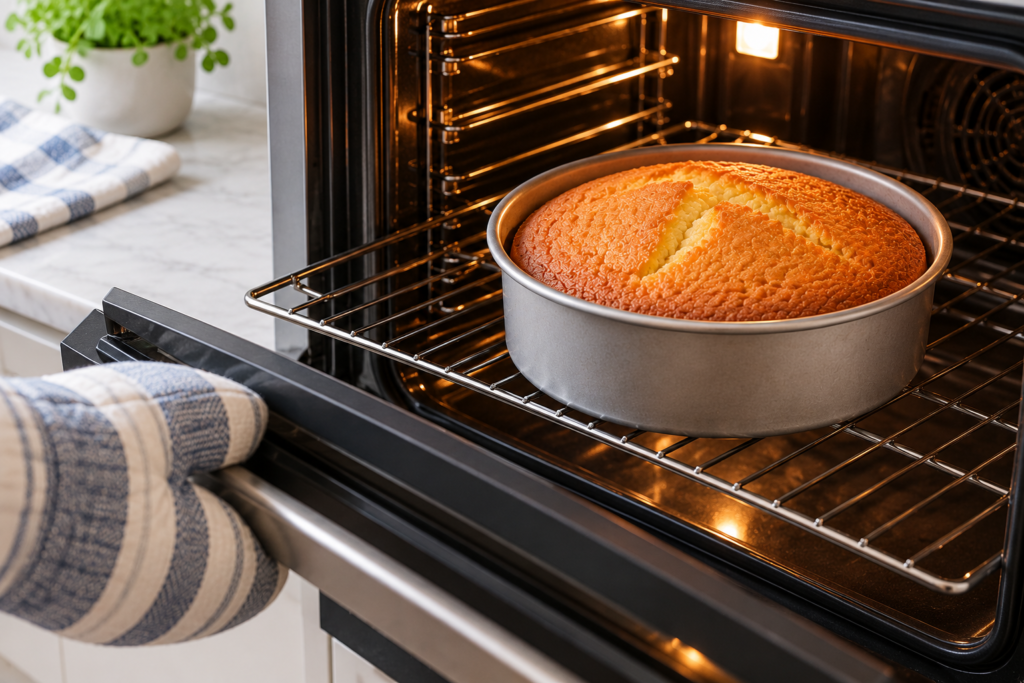
A cake that is still rising is fragile. Opening the door lets heat rush out, and the soft center can drop before it has set.
Look for: a sudden dip right after you checked on the cake or turned the pan early in the bake.
Fix: keep the door shut for roughly the first two-thirds of the baking time. If your recipe says to turn the pans, wait until the cake looks mostly set, then move them gently.
5. The Pan Was the Wrong Size or Too Full
A smaller pan makes the batter deeper, so the center needs much longer to bake. A different shape or material can also change how fast the heat reaches the middle, so the usual baking time may no longer fit.
Look for: batter close to the rim, batter spilling over, or a raw center long after the edges look done.
Fix: use the pan size the recipe asks for and fill it only as far as it says. If you have to swap pans, expect the time to change and test the center instead of trusting the timer.
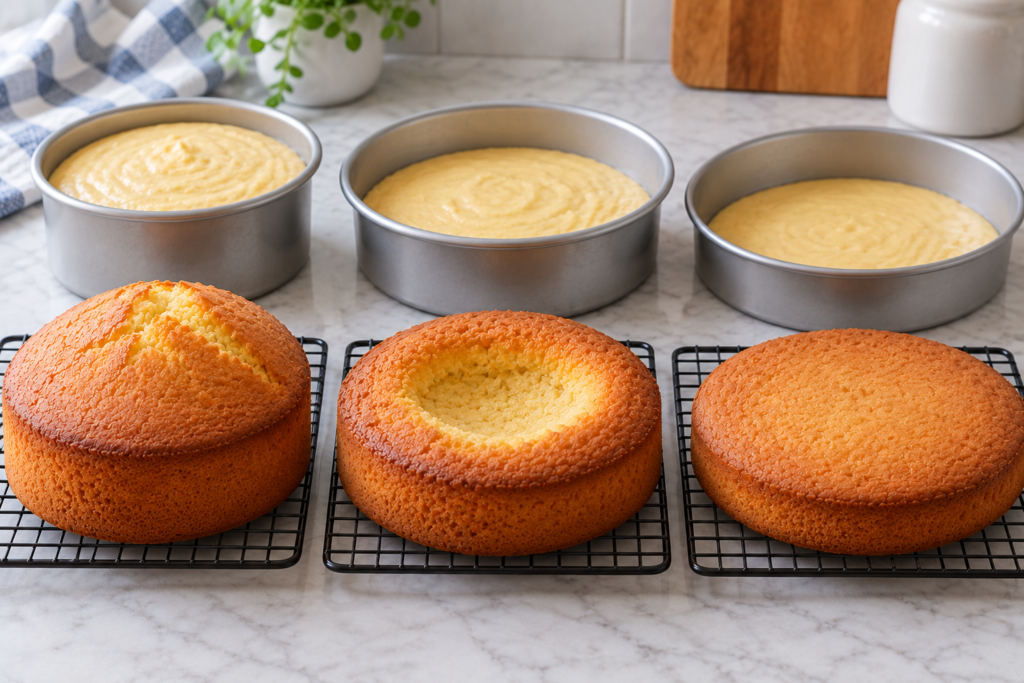
6. The Batter Was Mixed Wrong or the Recipe Was Changed
Mixing controls how much air goes into the batter. Beating butter and sugar or eggs for far too long can trap more air than the cake can hold. Swapping the flour, sugar, eggs or liquid can also throw the recipe off balance.
Look for: a cake that sinks again and again, even when the oven and baking time seem right.
Fix: follow the order and mixing times in the recipe. Once the flour goes in, mix only until combined. Weigh your ingredients if you can, and change just one thing at a time so you can see what made the difference.
How to Check Whether the Cake Is Done
Do not go by the timer alone. Start checking at the earliest time the recipe gives, and look for three signs together: the top looks set, the center springs back when pressed lightly, and a toothpick pushed into the very center comes out without wet batter.
For a deep cake, test right in the middle, not near the edge. If the top is already dark but the center still needs time, lay a loose sheet of foil over the top and keep baking.
Can You Fix a Cake That Has Already Sunk?
Once a fully baked cake has collapsed, it will not rise again. But it can still be served. Let it cool completely first, then pick a fix:
- Shallow dip: level the top with a serrated knife and cover it with buttercream. A simple vanilla buttercream recipe is below, or try our easy chocolate frosting.
- Deeper hollow: fill it with buttercream, or with fruit and whipped cream. Whipped cream and cream cheese frosting must be kept in the refrigerator, so chill the cake until you serve it.
- Big collapse: cut the cake into cubes and layer it with cream and fruit in a trifle bowl or small dessert cups.
Do not serve any part of the center that is still raw batter. Cut it out, or use only the baked parts.
How to Prevent a Sunken Cake Next Time
- Use the pan size the recipe asks for.
- Weigh or level-measure your ingredients, especially baking powder and baking soda.
- Check that the oven has reached the right temperature before the cake goes in.
- Grease and line the pan before you mix, so the batter goes into the oven right away.
- Keep the door closed until the cake is mostly set, then test the center.
- Cool the cake the way the recipe says before you move it or take it out of the pan.
If you want a reliable recipe to practice with, our step-by-step vanilla cake guide shows what the batter and the baked cake should look like at each stage.

Easy Vanilla Buttercream to Cover a Sunken Cake
A small batch of vanilla buttercream is the quickest way to hide a dip and make a sunken cake look finished. This one uses a standard butter and powdered sugar ratio and makes enough to fill a shallow dip and cover the top of one 8 or 9-inch cake.

Easy Vanilla Buttercream for a Sunken Cake
Ingredients
Equipment
Method
- Let the sunken cake cool completely. If the edges stand much higher than the dip, level them with a serrated knife.
- Beat the softened butter on medium speed for 2 to 3 minutes, scraping the bowl once, until pale and creamy.
- On the lowest speed, add the sifted powdered sugar in two or three additions, mixing until each is mostly absorbed.
- Add the vanilla, salt and 1 tablespoon of the cream. Mix on low, then add the rest of the cream a little at a time until the frosting is smooth and spreadable.
- Beat on medium-high for 1 to 2 minutes until light and fluffy.
- Spoon some buttercream into the dip first to level it, then spread the rest over the top with an offset spatula.
Notes
Frequently Asked Questions
Why Did My Cake Sink After I Took It Out of the Oven?
Most often the center had not finished setting, even if the top looked done. Too much baking powder, an oven that runs hot or cool, or a pan that was too small can cause the same result.
Can I Put a Sunken Cake Back in the Oven?
If you notice the center is still wet just after taking the cake out, you can usually put it back in and bake until set. Once the cake has cooled and collapsed, more baking will not bring back its height.
Why Is My Cake Cooked on the Outside but Raw in the Middle?
The oven may be too hot, the pan may be too small or deep, or the cake simply needs more time. Cover a dark top loosely with foil while the center finishes.
Can Opening the Oven Door Make a Cake Sink?
Yes, especially before the cake has set. Wait until near the end of the baking time before you open the door to test it.
Does Too Much Baking Powder Make a Cake Sink?
It can. Extra baking powder or baking soda makes the batter rise too fast and too far, so it cannot hold itself up. Use exactly what the recipe calls for.
Is a Cake Safe to Eat if It Sank in the Middle?
A sunken shape alone does not make a cake unsafe. Just make sure the center is fully baked and do not eat raw batter. If the cake has whipped cream, cream cheese frosting or another perishable filling, keep it in the refrigerator.
The Takeaway
A sunken cake usually means the center did not set before the cake cooled. Check for underbaking first, then look at your oven temperature, raising agents, pan size and mixing. Even when a cake cannot be made tall again, a little frosting or a trifle bowl can still turn it into a dessert worth serving.
Pingback: Why Is My Cake Dense? 8 Causes and Easy Fixes