
Runny buttercream can make decorating feel stressful, especially when the cake is ready and the frosting keeps sliding off your spatula. The good news is that you almost never need to throw it away. If you are wondering how to fix runny buttercream, start with two questions: is the frosting warm, and what kind of frosting is it? The answers tell you which fix to use.
Most of the time, the answer is simply to chill the bowl and mix again. Adding more powdered sugar helps some American buttercream, but it does not solve every problem, and it can quickly make frosting far too sweet.
Quick Answer: What Should You Do First?
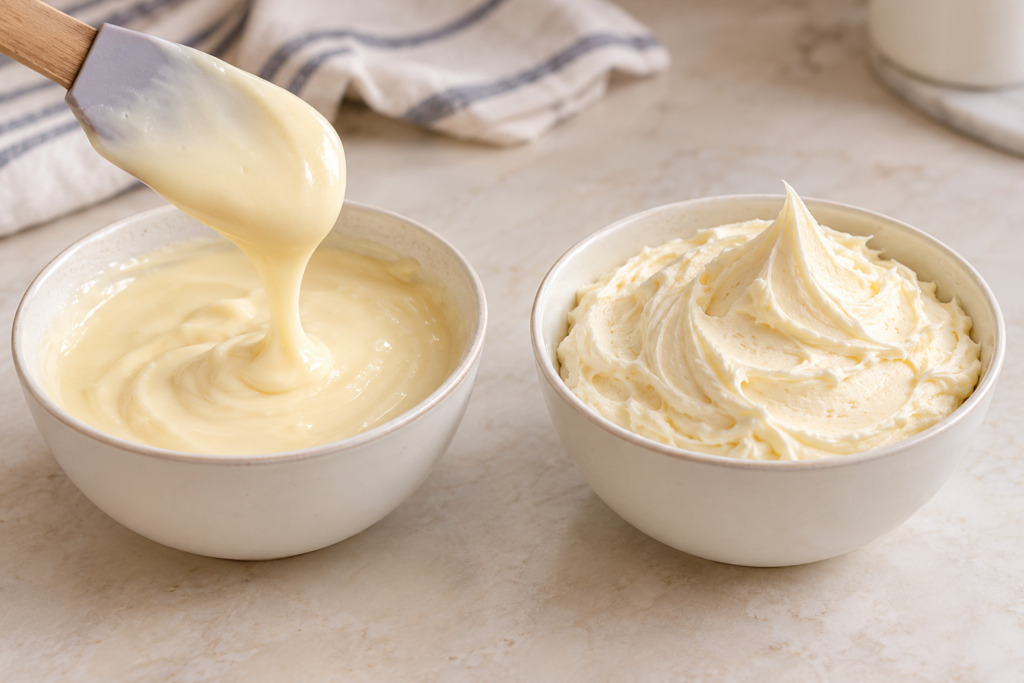
Stop decorating and look at the bowl. If the frosting is glossy, loose, or feels warm to the touch, put it in the fridge for 10 to 20 minutes, then beat it briefly and check again. If it is already cool and still too soft, the recipe probably has too much liquid or needs a small adjustment.
Good buttercream is smooth and spreadable, with enough body to hold a soft peak when you lift the spatula. For piped borders and flowers it needs to be a little firmer, so the ridges stay sharp.
| What you see | Likely cause | Try this first |
|---|---|---|
| Glossy, loose, feels warm | Butter or kitchen is too warm | Chill 10 to 20 minutes, then beat briefly |
| Cool but still thin | Too much milk, cream or other liquid | Add powdered sugar, 15 g at a time |
| Thin and very sweet | Not enough butter for the sugar | Beat in 15 to 20 g cool, softened butter |
| Sliding off the cake | Warm cake or warm frosting | Chill the whole cake 15 to 20 minutes |
| Soupy Swiss meringue buttercream | Butter or meringue was too warm | Chill 5 to 10 minutes, then whip again |
How to Thicken Runny Buttercream: 5 Easy Fixes
Work through these fixes in order. They start with the one that changes the flavor least. After each step, mix and check the texture before you try the next one.
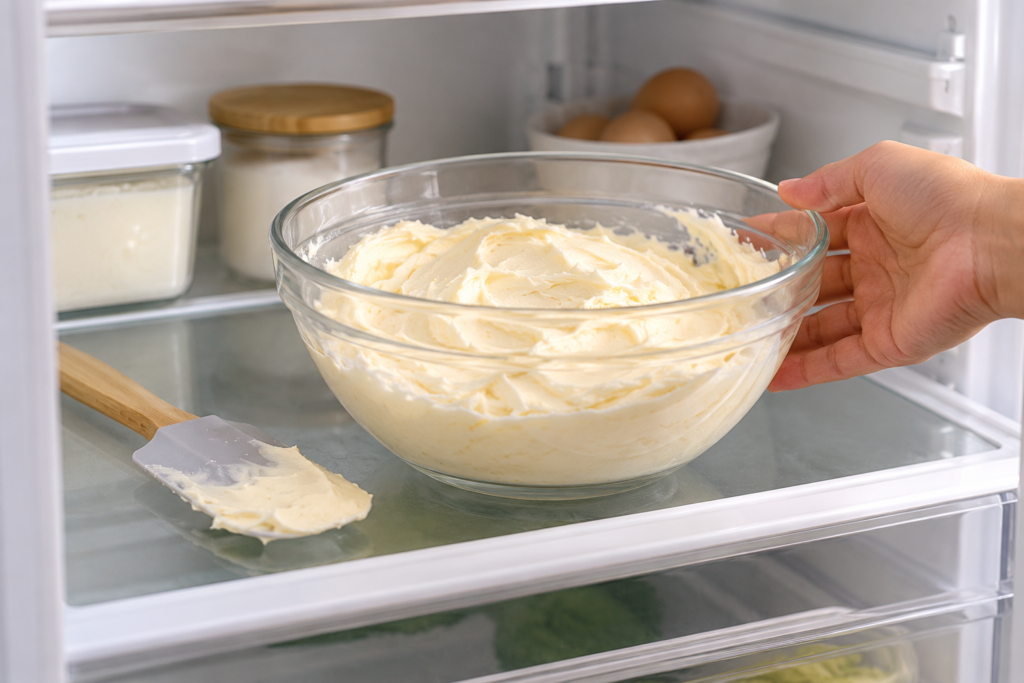
1. Chill the Buttercream
Cover the bowl and refrigerate it for 10 to 20 minutes. A large batch or a very warm kitchen may need a little longer. The edges firm up before the center does, so give it a good stir when it comes out.
You want the buttercream cool enough to hold its shape, not hard like a block of butter. If it does get too firm, leave it on the counter for a few minutes and mix again.
2. Beat It Again After Cooling
Once the frosting has cooled, beat it on medium speed for 30 to 90 seconds, scraping down the bowl as you go. This brings everything back together and evens out the texture. Stop as soon as it holds its shape, because a long mix warms the butter up again.
If the buttercream looks separated or curdled rather than simply loose, it may be too cold or unevenly chilled. For help with that kind of texture problem, read Why Is My Buttercream Grainy?
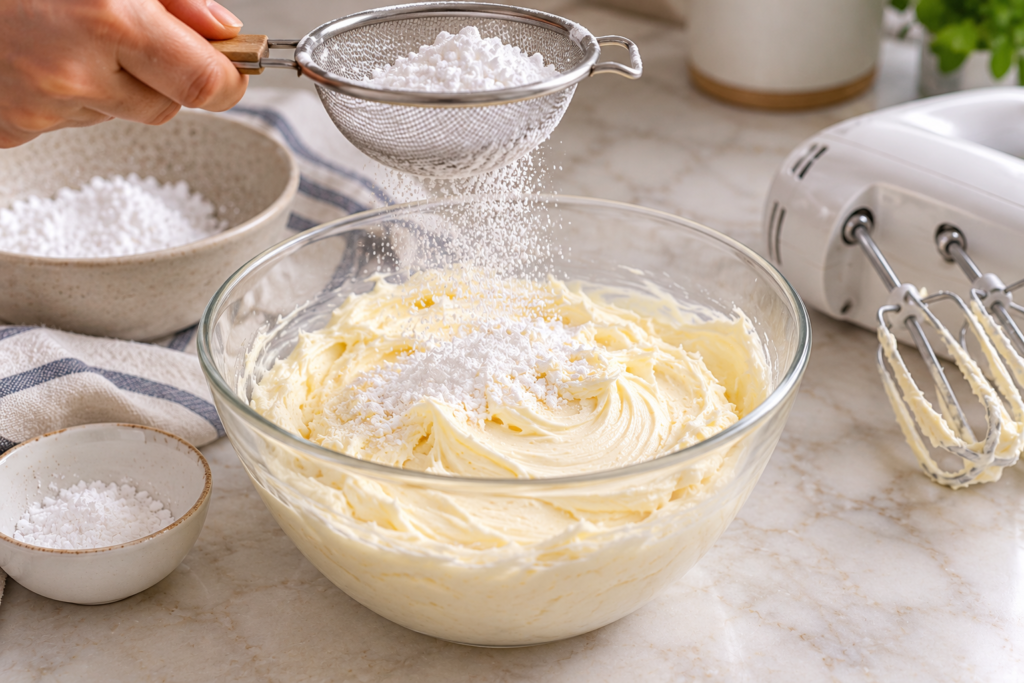
3. Add Powdered Sugar a Little at a Time
This fix is for American buttercream that is still soft after chilling. Sift in 15 g (about 2 tablespoons) of powdered sugar, mix on low speed until it disappears, and check the texture. Repeat only if you need to.
Powdered sugar does thicken American buttercream, but too much makes it stiff and overly sweet, so never add a large amount at once. And if the frosting was runny only because it was warm, chilling may be all it needed.
4. Add a Little More Butter
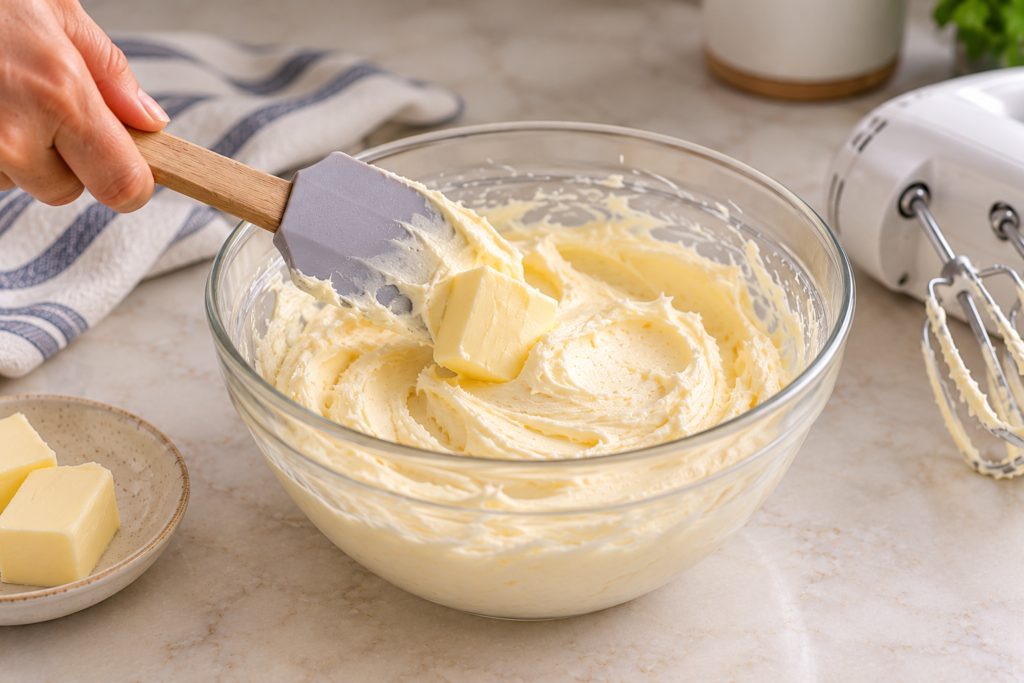
If your cooled American buttercream is still thin and tastes unusually sweet, there may not be enough butter for the amount of sugar. Beat in 15 to 20 g (about 1 to 1½ tablespoons) of cool, softened butter, then check again. The butter should bend when you press it, but it should not look shiny, oily, or melted.
Do not use this as the first fix for Swiss meringue buttercream or cream cheese frosting. Those frostings react differently to temperature, and they have their own fixes further down.
5. Stop Adding Liquid and Move Somewhere Cooler
Milk, cream, fruit juice, coffee, and even a generous pour of extract all loosen buttercream. If you added any of these, do not add more. Chill the bowl first. If it is American buttercream and it is still thin once cool, go back to fix 3 and add powdered sugar in small amounts.
A hot room will soften the frosting again while you work. Move the bowl away from a sunny window or a warm oven, and chill it for a few minutes between decorating stages if it starts to slump.
When you think it is ready, do the spatula test: lift some frosting out of the bowl. It should hold a soft peak and stay on the spatula without dripping.
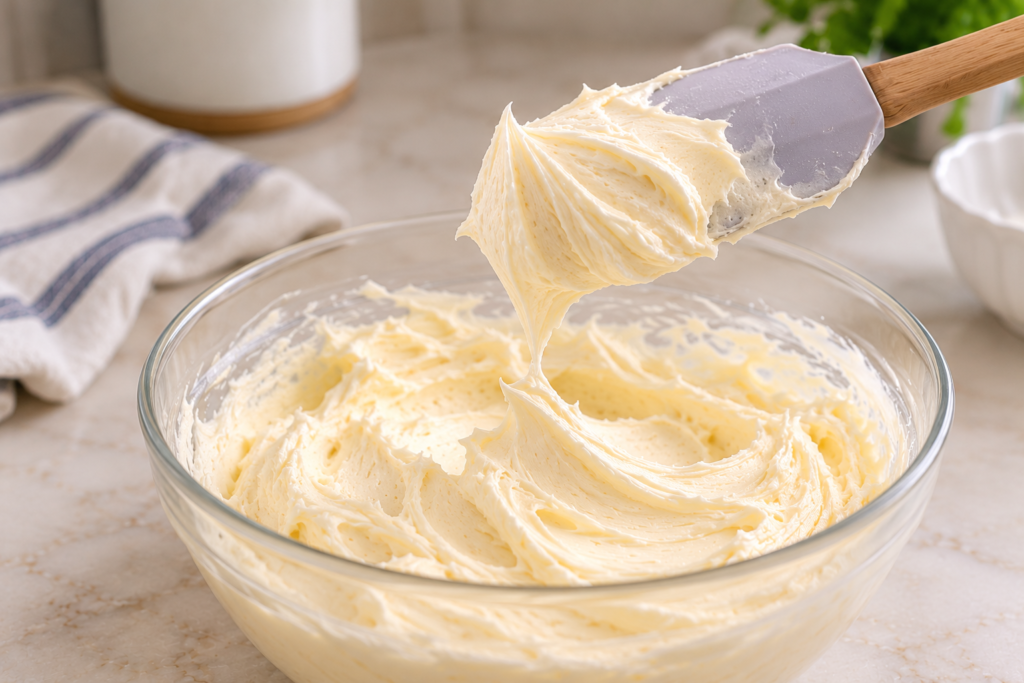
How to Fix Runny Frosting
Not every runny frosting is buttercream, so first be sure what you are working with. Butter-based frostings firm up when they are cooled. Whipped cream frosting does not behave the same way and usually needs to be whipped further while cold. A glaze is supposed to be thin, so it is not a problem to fix.
For any butter-based frosting, the rule is the same: chill first, mix, and look again before you change the ingredients. Then make one adjustment at a time. That way you can tell what actually helped, and you will know what to do next time.
How to Fix Runny Buttercream Without Powdered Sugar
You can often fix runny buttercream without adding any more powdered sugar. This is the best route when the frosting is already sweet enough.
- Chill and beat. Refrigerate the bowl for 10 to 20 minutes, then beat briefly. Warm frosting usually needs nothing else.
- Add a little butter. For American buttercream that stays thin when cool, beat in 15 to 20 g (about 1 to 1½ tablespoons) of cool, softened butter. Never use melted butter.
- Control the temperature. For Swiss meringue buttercream, chill a soupy batch for a few minutes and whip it again. For cream cheese frosting, refrigerate it and avoid long beating, which softens the cream cheese even more.
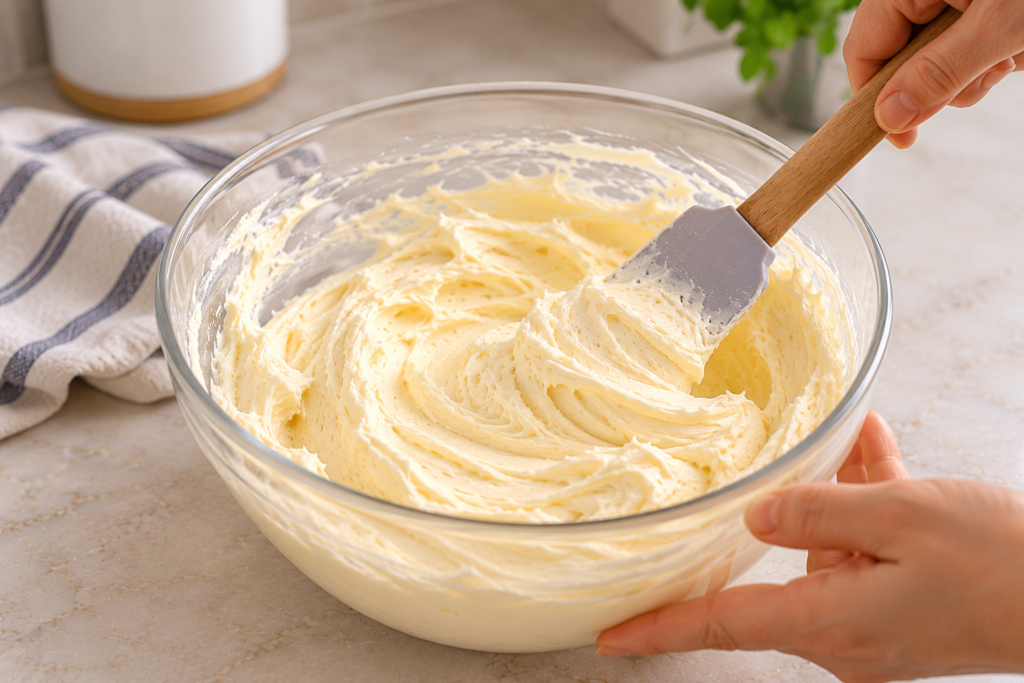
How to Fix Runny Frosting on a Cake
If the frosting is already sliding down the sides of your cake, stop spreading. First check the cake itself. If it is still warm, let it cool completely, because the heat from the cake melts the frosting underneath.
- Put the whole cake in the refrigerator for 15 to 20 minutes, until the frosting firms up enough to stay in place.
- Scrape away any frosting that has pooled at the base.
- Apply a thin crumb coat. This is a thin first layer of frosting that traps loose crumbs.
- Chill the cake again, then add the final coat.
If the frosting still slides after chilling, take off what you can and fix the batch in the bowl before you continue. Adding more layers over a slippery surface only makes it worse.
For a chocolate version, see our Chocolate Frosting Recipe. If you are adding color, our guide on How to Color Buttercream explains how to tint frosting without thinning it.
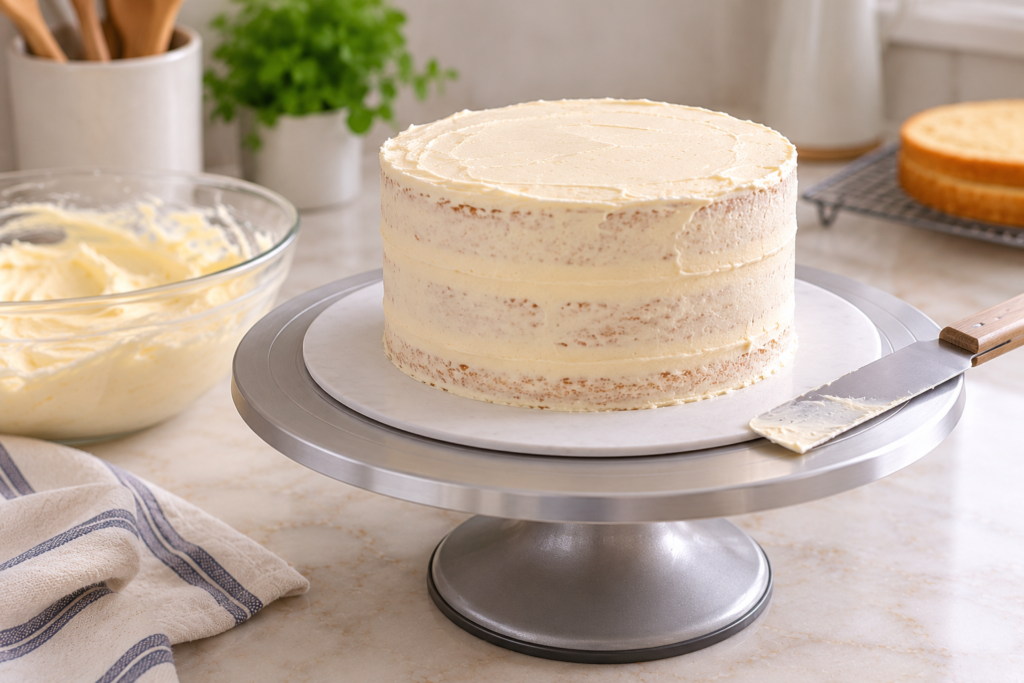
Fixes for Different Types of Frosting
American Buttercream
American buttercream is made with butter, powdered sugar, and a small amount of milk or cream. It is the most forgiving style and the one that responds best to the powdered sugar fix. Chill it first if it is warm. If it is still thin, add sifted powdered sugar in small amounts and stop as soon as it holds the shape you need.
Swiss Meringue Buttercream
Swiss meringue buttercream is made by heating egg whites and sugar together, whipping them into a meringue, and then beating in butter. It is very sensitive to temperature. If it looks soupy, chill the bowl for 5 to 10 minutes and whip again, repeating in short rounds if needed. If it looks grainy or curdled and feels cold, it needs gentle warming instead, not more chilling.
The meringue must cool down before the butter goes in. For food safety, follow the heating instructions in a reliable recipe and do not guess the temperature of the egg mixture.
Cream Cheese Frosting
Cream cheese frosting turns loose when the cream cheese is too warm or has been beaten for too long. Chill it for 20 to 30 minutes, then stir or mix just until smooth. Do not add extra liquid. Use full-fat block cream cheese when the recipe calls for it, because spreadable cream cheese from a tub is softer and wetter.
Why Is My Buttercream Runny?
- The butter was too warm. Softened butter should give slightly when pressed, but it should not look oily or melted.
- The kitchen is hot. Warm air, warm hands, and a mixer running for a long time all soften the fat in the frosting.
- Too much liquid went in. Milk, cream, juice, coffee, or extract can loosen a batch very quickly.
- The balance is off. American buttercream with too little powdered sugar or butter will not hold its shape.
- The cake was still warm. Frosting melts and slides when it touches a warm cake.
- The wrong fix was used. Cream cheese frosting and Swiss meringue buttercream do not respond to the same fixes as American buttercream.
How to Prevent Runny Buttercream Next Time
- Use softened butter, never melted butter. It should feel cool and pliable, not greasy.
- Measure with a kitchen scale if you can, and add milk or cream a little at a time instead of all at once.
- Let cakes cool completely before you frost them.
- Keep the bowl and tools away from the oven, dishwasher steam, and direct sunlight.
- If the frosting starts to look shiny or slump while you mix, stop and chill the bowl.
- Add food coloring gradually. A lot of liquid color can thin the frosting, so gel color is the safer choice.
- For meringue buttercream, let the meringue cool before adding butter and follow the temperature cues in your recipe.
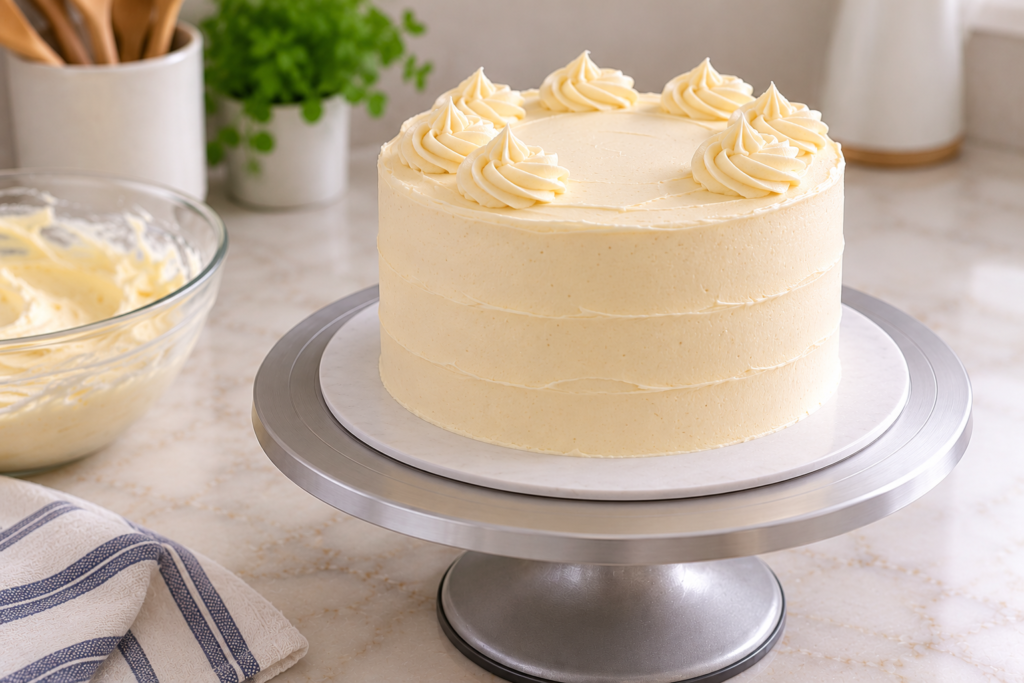
A Basic Vanilla Buttercream That Holds Its Shape
If you would rather start again with a fresh batch, this simple American buttercream is a good base. The butter stays cool and the cream goes in a teaspoon at a time, which are the two habits that prevent runny buttercream in the first place.
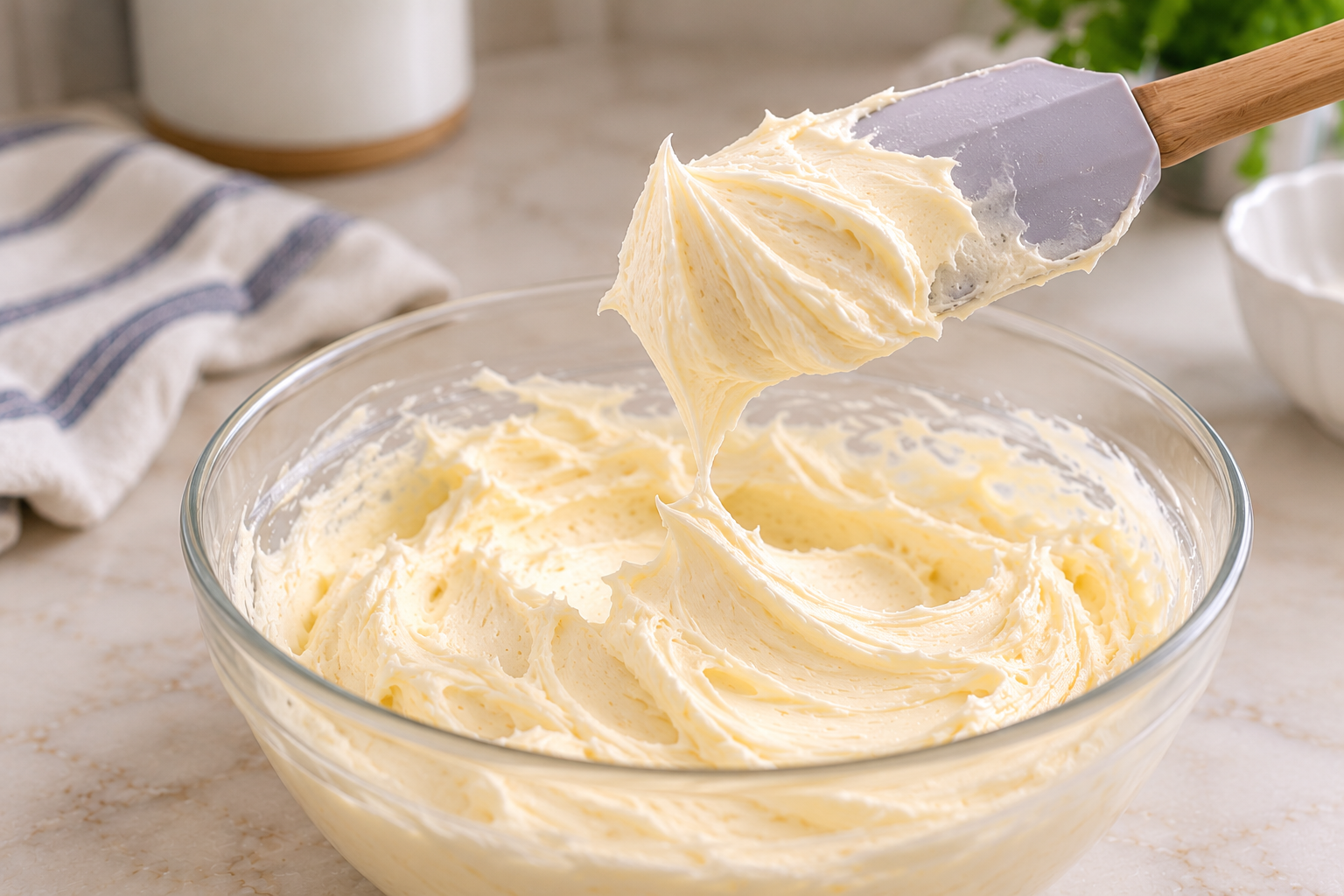
Basic Vanilla Buttercream (That Holds Its Shape)
Ingredients
Equipment
Method
- Beat the softened butter on medium speed for 2 to 3 minutes, scraping down the bowl once, until pale, creamy and smooth.
- On the lowest speed, add the sifted powdered sugar in three or four additions, mixing until each one is mostly absorbed. The mixture will look thick and stiff at this stage.
- Add the vanilla and salt, then add the cream 1 teaspoon at a time, mixing on low after each addition. Stop as soon as the frosting is smooth and spreadable. You may not need all of the cream.
- Raise the speed to medium-high and beat for 1 to 2 minutes, until light and fluffy. Do not overbeat, because a long mix warms the butter.
- Do the spatula test: lift some frosting out of the bowl. It should hold a soft peak and stay on the spatula without dripping.
- If the frosting looks glossy or loose, chill the bowl for 10 to 20 minutes and beat briefly again before using.
Notes
Frequently Asked Questions
Can I put runny buttercream in the fridge?
Yes. Chill it for 10 to 20 minutes, then beat it briefly and check the texture. Do not leave it until it is completely hard, because very firm buttercream is difficult to mix smooth again.
Should I add flour or cornstarch to thicken buttercream?
Do not add raw flour. Cornstarch is not a good first fix either, because it can leave a powdery texture. Start with chilling. For American buttercream that stays thin, use a small amount of sifted powdered sugar.
Why is my buttercream runny after I added milk?
The extra liquid loosened the mixture. Chill it first. If it is American buttercream and it is still thin when cool, add powdered sugar in small amounts until it holds its shape.
How long should I chill runny buttercream?
Start with 10 to 20 minutes for buttercream in a bowl. A warm kitchen or a large batch may need longer. Go by the texture rather than the clock: you want it cooler and thicker, not a solid block.
Can I use runny buttercream to frost a cake?
It is better to wait until it holds a soft peak and spreads without running off the spatula. If it has already started sliding down the cake, chill the cake briefly and fix the frosting in the bowl before you carry on.
Why is my Swiss meringue buttercream soupy?
The butter or the meringue was too warm. Chill the bowl for 5 to 10 minutes and whip again. If it is cold and curdled rather than soupy, it needs the opposite: gentle warming, then whipping.
What temperature should butter be for buttercream?
For most American buttercream recipes, butter should be softened but still cool and able to hold its shape, around 65–68°F (18–20°C). The exact number depends on the recipe and your kitchen, so use it as a guide and avoid butter that looks shiny or partly melted.
The Takeaway
Runny buttercream is almost always a temperature problem or a balance problem, not a reason to start over. Chill it first, mix again, and only then make one small adjustment that suits your type of frosting. Once it holds its shape in the bowl, you can get back to decorating.
Pingback: How to Make Buttercream Less Sweet: 7 Easy Fixes
Pingback: Why Is My Cream Cheese Frosting Runny? 6 Fixes