

If you are asking why is my buttercream grainy, do not throw it away yet. A sandy or gritty batch is one of the most common frosting problems, and in most cases it is fixable once you work out what you are actually feeling.
For a typical American buttercream, the trouble usually starts with powdered sugar that is lumpy, added too quickly, or not given enough mixing time. Butter temperature matters too. Butter that is too cold can leave little firm pieces that feel grainy even though the sugar is not the problem.
After three years working in a bakery, one of the most useful habits I learned is to diagnose the texture before changing the recipe. One small adjustment is usually better than adding several ingredients at once.
In this post
- Quick answer
- Find out what kind of grainy you have
- The 7 causes
- How to fix grainy buttercream right now
- What not to do
- How to prevent it next time
- FAQs
Quick Answer
- Fine sandy grit usually means the powdered sugar has not blended in fully. Beat longer, then add warm milk or cream 1 teaspoon at a time.
- Waxy or firm little pieces usually mean the butter is too cold. Gently warm the bowl and whip again.
- A curdled, greasy or separated look means the buttercream has split. Fix the temperature, not the ingredients.
- To prevent it: sift the powdered sugar, soften the butter properly, add the sugar in stages and mix until it feels smooth, not just until it looks combined.
First, Find Out What Kind of Grainy You Have
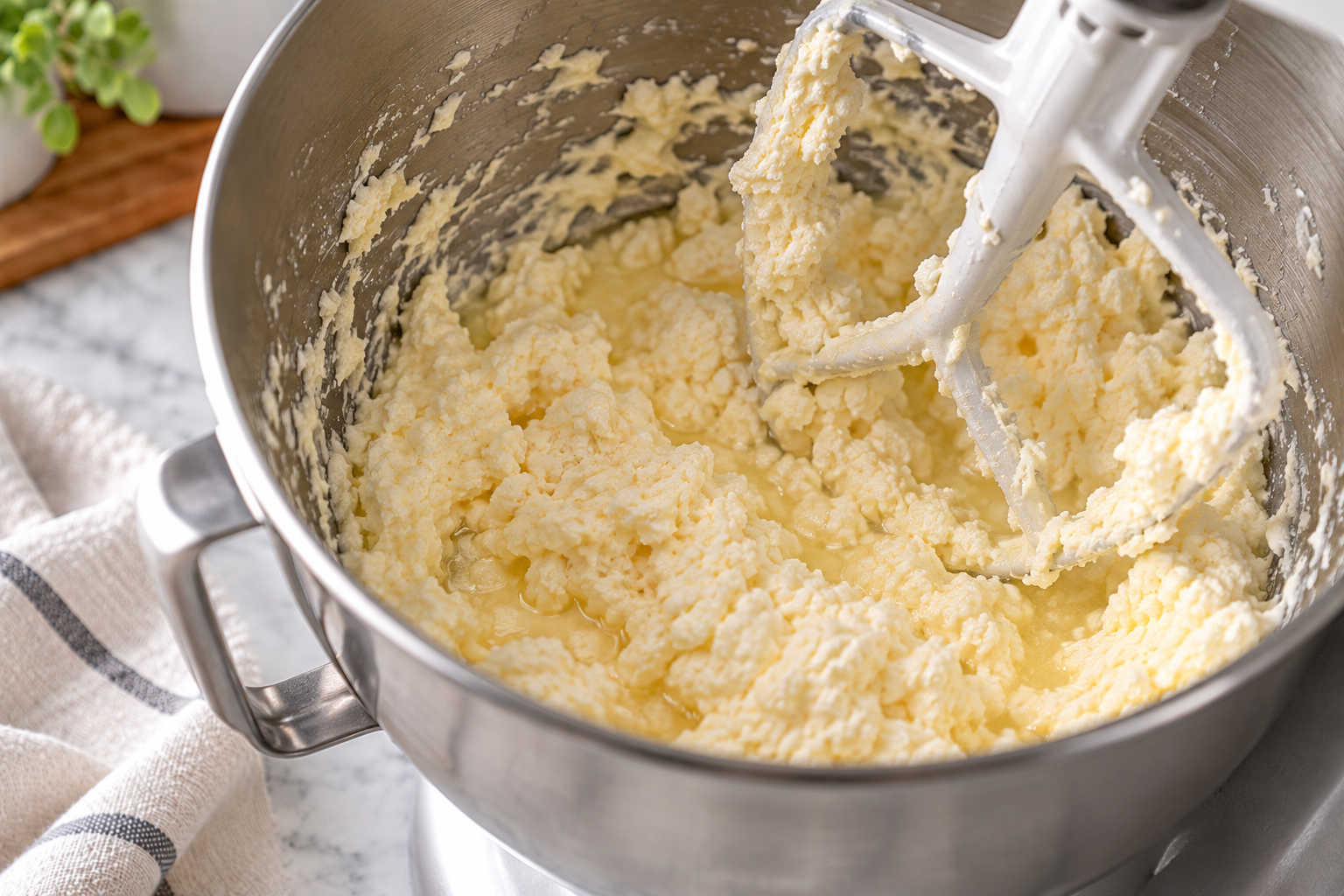
Take a tiny amount of buttercream and rub it gently between clean fingertips. If it feels like fine sand and the grains dissolve as you taste it, the sugar is the likely problem. If you feel soft or waxy little pieces that smear rather than dissolve, the butter is probably too cold.

A third possibility looks grainy but is actually a broken emulsion. An emulsion is simply fat and liquid held together in a smooth mixture. When it breaks, the buttercream looks curdled, loose, greasy or separated rather than sandy. It needs a temperature correction, not more liquid.
| What you notice | Most likely cause | Best first move |
|---|---|---|
| Fine sandy grit | Powdered sugar not fully blended in | Beat longer, then add warm liquid a little at a time |
| Waxy or firm little pieces | Butter is too cold | Gently warm the bowl and whip again |
| Curdled, separated or greasy look | Broken emulsion | Correct the temperature and keep mixing |
| Hard crystals in Swiss or Italian buttercream | Sugar did not dissolve during the cooked stage | Check the sugar-dissolving step before adding butter |
Why Is My Buttercream Grainy? The 7 Causes

1. Your powdered sugar was lumpy
Powdered sugar compacts in the bag and forms small lumps. If those lumps go straight into the buttercream, some stay behind as tiny pockets of sugar instead of becoming part of a smooth frosting.
The easiest prevention is to sift the powdered sugar before adding it. This matters most when the sugar has been sitting in the pantry for a while or looks visibly clumped.

2. You added the sugar too quickly
American buttercream contains a lot of powdered sugar and only a small amount of liquid. Adding all the sugar at once makes a stiff mixture that is hard to combine evenly.
Add the sugar in two or three additions on low speed. Scrape the bottom and sides of the bowl between additions so no dry sugar stays hidden there.
3. You did not mix it long enough
A quick minute of mixing is often not enough. Once all the sugar and liquid are in, keep beating until the frosting looks creamy and the gritty feeling is gone.
Do not judge the buttercream only by how it looks in the bowl. A frosting can look fluffy while still feeling slightly sandy. Use the fingertip test. If you still feel sugar, give it more time before adding anything new.
4. Your butter was too cold
Butter should be softened, not melted. You should be able to press a finger into it and leave a clear dent, while the butter still feels cool and holds its shape. Cold butter does not blend smoothly, so it leaves small firm pieces through the frosting.

If the buttercream has small firm pieces and does not feel like sugar grit, gently warm the outside of the bowl while mixing. Wrapping a warm, damp towel around the bowl for a minute works well. Stop as soon as the buttercream starts to soften. The goal is to bring the butter back to a workable temperature, not to melt it.
5. Your butter was too warm
The opposite problem can also make buttercream look wrong. If the butter turns greasy or partly melts, the frosting loses its structure and becomes loose or separated.
If the bowl feels warm and the frosting looks soupy, stop mixing and chill the bowl for about 10 minutes. Then whip again and check the consistency.
6. You are making Swiss or Italian buttercream
Not every grainy buttercream has the same cause. Swiss and Italian buttercreams use granulated sugar, and that sugar has to dissolve during an earlier heating step, before the butter goes in.
For Swiss meringue buttercream, the sugar and egg whites are heated together. Before moving on, rub a little of the mixture between your fingertips. You should not feel any sugar grains.
Italian buttercream uses a cooked sugar syrup instead, usually taken to about 240°F (115°C) before it is poured into the meringue. Because the sugar dissolves in the syrup, that cooking stage is what gives you a smooth frosting later.
7. An add-in is making it feel grainy
Sometimes the base buttercream is smooth and the problem starts after you add cocoa powder, freeze-dried fruit powder, melted chocolate or jam. Dry powders can carry small lumps, and melted chocolate can set into tiny hard pieces if it hits cold buttercream.
Sift dry powders before adding them. Let melted chocolate cool until it is barely warm, then add it gradually. Add wet ingredients in small amounts and let each one blend in before adding more. For a cocoa version that stays smooth, see this chocolate frosting recipe.
How to Fix Grainy Buttercream Right Now
If your buttercream is sandy but otherwise holds together, start with the simplest rescue. Do not reach for a big splash of milk or cream first.
- Beat it longer. Mix for another 3 to 5 minutes on low to medium speed. Scrape the bowl once or twice.
- Add warm liquid only if needed. Add about 1 teaspoon of warm milk or cream at a time, mixing completely after each addition. Stop as soon as the texture turns smooth.
- Let it rest briefly. Cover the bowl and leave the buttercream for 15 to 20 minutes, then mix again. This gives the remaining sugar time to soften.
- If the butter is cold, warm the bowl instead. Use gentle warmth on the outside of the bowl for short periods while mixing. Do not melt the butter.
- If it is actually split, change the fix. A curdled buttercream needs gentle warming if it is too cold, or a short chill if it is too warm, followed by more mixing.

What Not to Do When Buttercream Is Grainy
- Do not pour in a lot of milk at once. Too much liquid makes a stable buttercream loose, or causes it to split.
- Do not microwave the whole bowl. Uneven heating melts parts of the butter while other parts stay cold.
- Do not change ingredients at random. First decide whether you have sandy sugar, cold butter or a broken emulsion.
- Do not assume more sugar will help. If the frosting is already gritty, extra powdered sugar makes it worse.
How to Prevent Grainy Buttercream Next Time
- Use the right sugar. American buttercream uses powdered sugar. Cooked meringue buttercreams use granulated sugar that dissolves during the cooking step.
- Sift the powdered sugar. This removes compacted lumps before they reach the frosting.
- Soften the butter properly. It should dent easily but not look greasy or melted.
- Add ingredients gradually. Mix the sugar in stages and scrape the bowl so dry sugar does not collect under the paddle.
- Keep temperatures close. Buttercream behaves more predictably when the butter and the liquid are not very different in temperature.
- Give it enough mixing time. A smooth feel matters more than stopping as soon as everything looks combined.
Once your buttercream is smooth, you can tint it with this guide on how to color buttercream, or use it on a vanilla cake or a red velvet cake.
Grainy Buttercream FAQs
How do I fix grainy buttercream fast?
Start by beating it for another 3 to 5 minutes. If the frosting is still sandy, add warm milk or cream about 1 teaspoon at a time and mix thoroughly after each addition. If the problem is cold butter rather than sugar, warm the bowl gently instead of adding liquid.
Why is my buttercream grainy even after mixing?
Check how the grains feel. If they feel sandy, the powdered sugar was probably lumpy or has not blended in yet. If the pieces feel waxy or firm, the butter is too cold. If the frosting looks curdled or separated, it is a temperature problem and needs warming or chilling, not more mixing alone.
Can I fix grainy buttercream after refrigerating it?
Often, yes. Refrigeration makes the butter firm, so let the buttercream come back toward room temperature before whipping it again. If it stays stiff or lumpy, gently warming the bowl while you mix usually brings it back to a smooth texture.
Does sifting powdered sugar really matter?
Yes. Sifting breaks up compacted lumps before they are mixed into the buttercream. It takes a minute and is most helpful when the sugar has clumped in storage. Lumps that go into the bowl are much harder to remove afterward than to prevent.
Why is my Swiss meringue buttercream grainy?
The sugar probably did not dissolve fully while the egg whites and sugar were heated. Rub a small amount between your fingertips before whipping. If you feel grains, keep heating gently and stirring until the mixture feels completely smooth.
What is the difference between grainy and split buttercream?
Grainy buttercream feels sandy because of sugar, or sometimes cold butter pieces. Split buttercream looks curdled, greasy, loose or separated. Grainy sugar needs more mixing and sometimes a little warm liquid. Split buttercream needs its temperature corrected.
Can I prevent grainy buttercream without changing the recipe?
Usually. Sift the powdered sugar, soften the butter properly, add the sugar gradually, scrape the bowl, and mix until the frosting feels smooth rather than stopping as soon as the ingredients are combined. The method matters more than the recipe here.
Final Takeaway
A grainy batch is usually a texture problem, not a ruined batch. Sandy grit points to sugar, firm little pieces point to cold butter, and a curdled look means the temperature needs correcting. Slow down, find the cause, and make one change at a time.
Did this fix your buttercream? Leave a comment and tell me what your frosting looked like, and I will help you work out what went wrong.
Pingback: How to Fix Runny Buttercream: 5 Easy Fixes
Pingback: Can You Freeze Buttercream? How to Freeze and Thaw It