
Can you freeze buttercream? Yes. Most buttercream frostings freeze well and come back to a smooth, spreadable texture once they are thawed and whipped again. The best results come from airtight packing, a slow thaw in the refrigerator and a little patience before you mix.
Freezing is a handy way to save leftovers or get ahead before a birthday. How long it keeps and how it feels afterwards depend on the ingredients, so treat the times below as general guidance, not a guarantee.
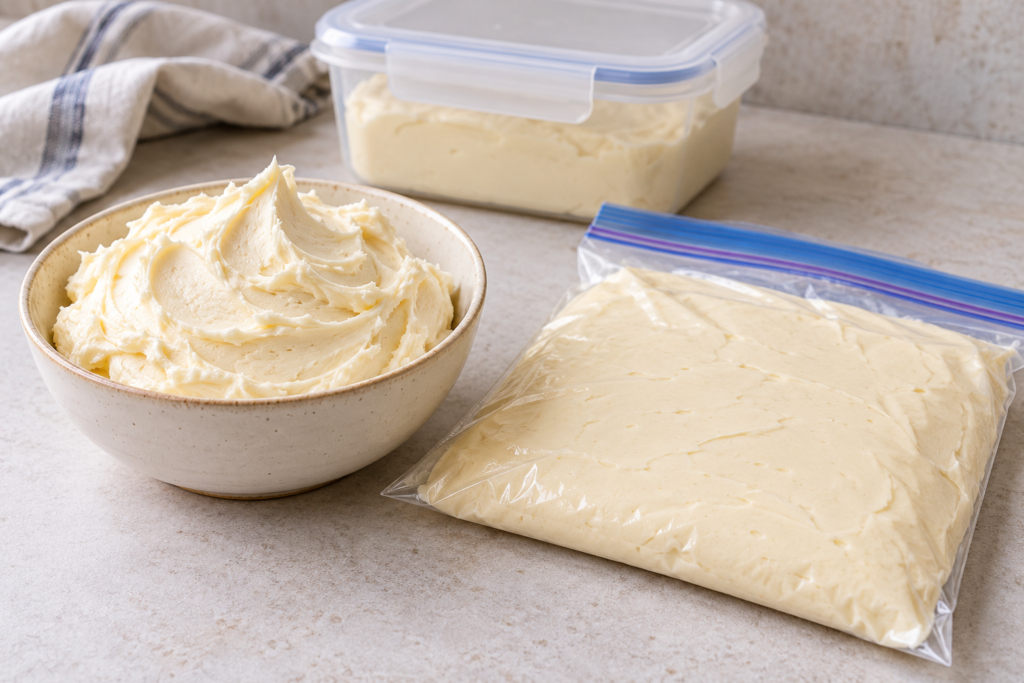
How to Freeze Buttercream Step by Step
The aim is to protect the frosting from air, freezer smells and drying out. Pick a container that fits the amount you have, with as little empty space as possible.
1. Cool and Portion It
If the buttercream has just been mixed, let it settle until it no longer feels warm. Divide it into amounts you are likely to use in one go, such as enough for one small cake. Small portions thaw faster, and you will not have to thaw the whole batch for a few cupcakes.
2. Pack It in a Freezer Bag or Airtight Container
For a freezer bag, spoon the buttercream in and press out the extra air, then flatten the bag into an even layer so it stacks neatly and thaws evenly. For a container, press a piece of food-safe plastic wrap directly onto the surface of the frosting before you close the lid.

3. Label the Date and Type
Write the date and the type of frosting on the bag or container. Add the flavor or color if you have several batches, because plain vanilla, chocolate and tinted buttercream look surprisingly alike once they are frozen.

4. Freeze Flat, Then Stack
Lay freezer bags flat until they are solid, then stack them. Keep your freezer at 0°F (-18°C) or below, and do not store the frosting next to uncovered foods with strong smells.
How Long Does Buttercream Last in the Freezer, the Fridge and at Room Temperature?
These are broad guidelines for common homemade frostings, not guaranteed deadlines. The ingredients, how clean your tools were, the packaging and how long the frosting has already been out all make a difference. Keep the refrigerator at 40°F (4°C) or below.
| Where | General guidance | What to know |
|---|---|---|
| Freezer | About 2 to 3 months for best quality | Seal tightly and label the date. Flavor and texture slowly decline after that. |
| Refrigerator | About 1 to 2 weeks for many buttercream recipes | Keep it covered. Cream cheese and whipped cream frostings keep for a shorter time and must stay chilled. |
| Room temperature | Often 1 to 2 days for American buttercream in a cool room | This is not true for every frosting. Never use this range for anything perishable. |
Food-safety note: cream cheese frosting and whipped cream frosting are perishable and must be kept chilled. As a general rule, perishable foods should go back in the refrigerator within 2 hours, or within 1 hour when the room is hotter than 90°F (32°C).
How to Thaw Frozen Buttercream
Move the sealed bag or container to the refrigerator and let it thaw slowly. A small portion needs several hours, and a large container may need overnight or longer. Keep it sealed the whole time. If you open it early, condensation forms on the surface and makes the frosting wet. Check the center, not just the edges, before you decide it is ready.

Once thawed, let the frosting stand at room temperature until it is soft enough to stir. The time depends on the amount and how warm your kitchen is. Perishable frostings should not sit out for long, so work in short stages and return them to the refrigerator when you need to.
Do not microwave the whole batch. The outside melts while the center stays cold, and the frosting separates unevenly. If you are in a hurry, move a small amount to a clean bowl and let that soften while the rest stays chilled.
How to Re-Whip Buttercream After Freezing
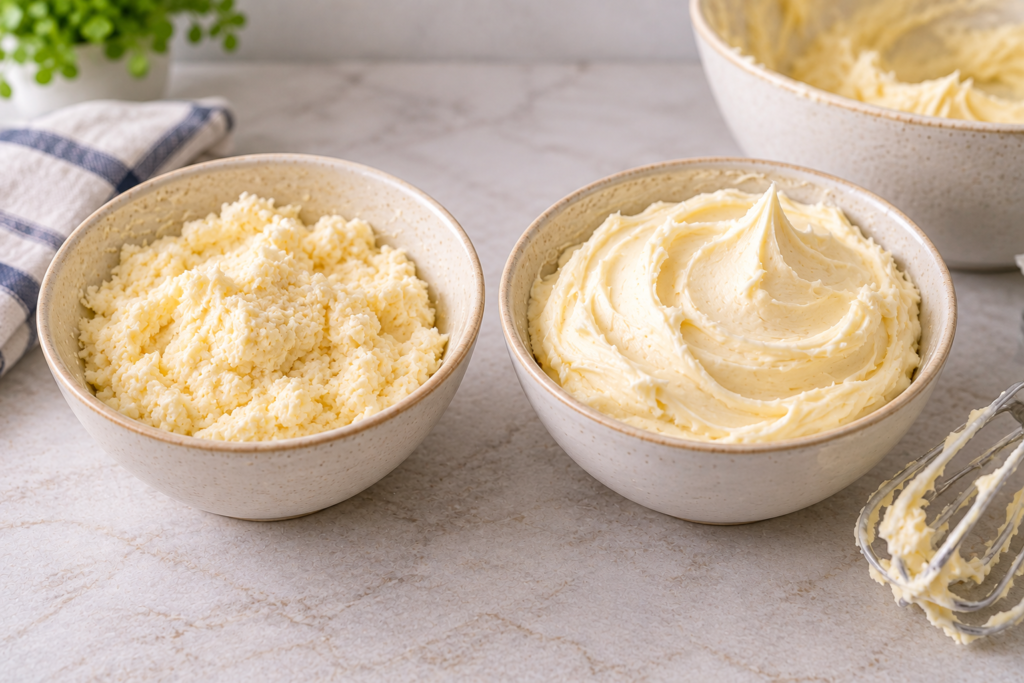
Thawed buttercream often looks dense, separated or a little lumpy at first. That does not mean it has gone bad. It usually just needs to reach an even temperature and then a short mix.
- Let it soften first. The frosting should feel cool but soft enough for a spatula to move through it. If it is very firm, the mixer will leave lumps. If it looks oily or almost melted, chill it briefly and try again.
- Mix on low, then speed up. Put it in a clean bowl, using the paddle attachment if you have one. Mix on low for about 30 seconds, then on medium for 1 to 3 minutes, scraping down the bowl, until it is even and fluffy and holds a soft peak.
- Adjust only after checking the temperature. If it is stiff, let it soften more before you add anything. If it is loose and shiny, chill the bowl for 10 to 15 minutes and beat again. Add a tiny splash of milk or cream only if the frosting really needs loosening.
What If Thawed Buttercream Looks Curdled?
A curdled, cottage-cheese look usually means the frosting is at an uneven temperature. Keep mixing for another 2 to 4 minutes, scraping the bowl once or twice. If it stays lumpy and cool, hold a warm towel around the outside of the bowl for a few seconds, then keep mixing. You only want to soften a little of the butter, not melt the frosting.
What If It Looks Grainy?
First work out whether it is cold and clumpy or actually sandy. If it is cold, let it soften and beat it again. If American buttercream feels sandy, some of the powdered sugar may not have dissolved. Longer mixing helps, though it may not turn perfectly silky. For more help, read Why Is My Buttercream Grainy?
If the frosting is still too loose once it has reached an even temperature and been mixed well, do not add sugar or liquid at random. Follow the steps in How to Fix Runny Buttercream.
Which Types of Frosting Freeze Well?
Freezing works best with stable, butter-based frostings. Frostings with a lot of water or delicate whipped air change more.
| Type | How it freezes | Best approach |
|---|---|---|
| American buttercream | Usually freezes very well. May look stiff or separated after thawing. | Thaw in the fridge, soften, then re-whip. |
| Swiss meringue buttercream | Usually freezes well, though it can look broken until it is mixed again. | Thaw slowly, bring to an even cool room temperature, then re-whip. |
| Cream cheese frosting | Can be frozen, but may turn softer or slightly grainy. | Perishable, so keep it chilled. Thaw in the fridge and mix gently. |
| Whipped cream frosting | Often loses volume or turns watery. | Perishable, so keep it chilled. Freezing is usually not worth it. |
Chocolate buttercream freezes the same way as vanilla. If you would rather make a fresh batch than thaw leftovers, try our Chocolate Frosting Recipe.
Can You Freeze a Frosted Cake or Frosted Cupcakes?
Yes, most cakes and cupcakes frosted with buttercream can be frozen. Chill the decorated cake first until the frosting is firm, about 30 to 60 minutes depending on its size. Then wrap it carefully, or put it in a cake box inside a large freezer bag or airtight container.
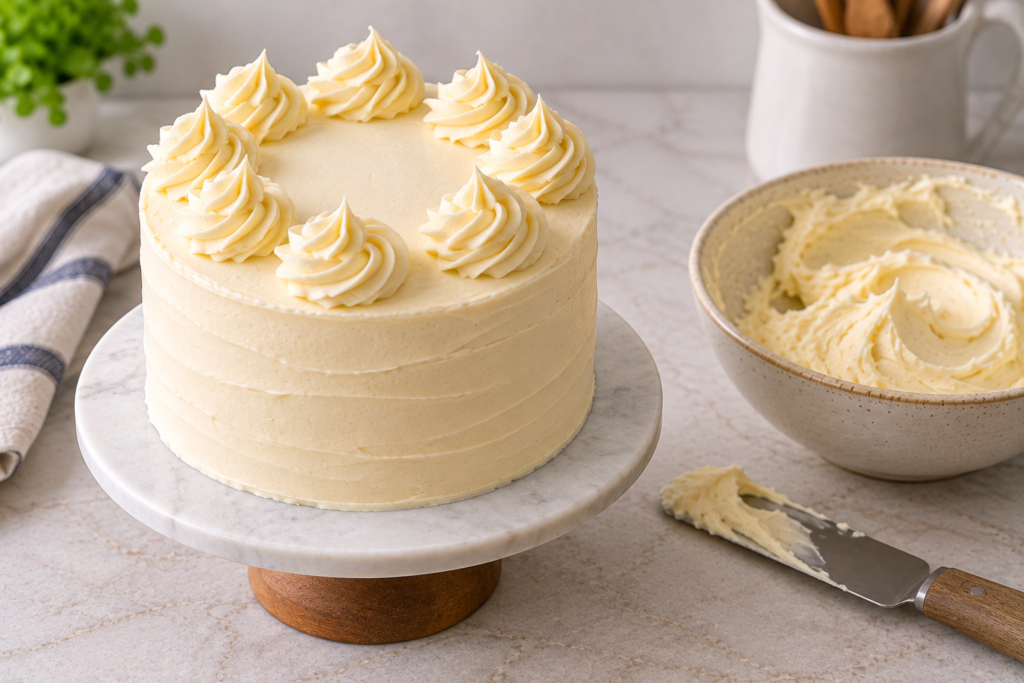
For cupcakes, set them on a tray until the frosting is firm, then move them to a container tall enough that the lid does not touch the swirls. For best quality, use them within about 1 to 3 months.

Thaw the cake or cupcakes in the refrigerator while they are still covered, then let them come close to serving temperature before you unwrap them fully. Keeping them covered stops condensation from landing on the frosting. Cakes with cream cheese frosting, whipped cream, custard or other perishable fillings must stay chilled.
Can You Freeze Colored Buttercream?
Yes. Colored buttercream freezes well and most shades hold up. Some colors deepen or shift a little in storage, especially very bright shades and colors made with liquid food coloring.
Store each color in its own airtight bag or container and label the shade. After thawing and re-whipping, check the color in natural light before you use it. For help choosing and mixing colors, see How to Color Buttercream.
Mistakes to Avoid
- Leaving air in the package. Air dries the surface and lets freezer smells into the frosting.
- Freezing one huge block. Large portions take a long time to thaw. Divide it up first.
- Thawing on a warm counter for hours. Thaw in the refrigerator, especially if the frosting contains anything perishable.
- Whipping while it is still hard. Let it soften evenly before you mix.
- Fixing separation with lots of liquid. Temperature is nearly always the first thing to correct.
- Skipping the label. Add the date and type so old batches are not forgotten at the back of the freezer.
Frequently Asked Questions
Can you freeze buttercream twice?
It is better to freeze it once and thaw only what you need. Repeated freezing and thawing lowers the quality and makes the texture less predictable.
Should buttercream be frozen in a bag or a container?
Either works as long as it seals well. A freezer bag is good for flat portions that stack and thaw quickly. An airtight container protects frosting you do not want squashed.
Can I decorate a cake with buttercream straight after thawing?
Not usually. Thawed buttercream needs to soften and be whipped again first. Use it once it is smooth and spreadable, with no cold lumps or oily patches.
Why is my buttercream watery after thawing?
Condensation is the usual cause, often because the package was opened while the frosting was still cold. Keep it sealed while it thaws, let it reach an even temperature and mix it. If it is still runny, chill it briefly and beat again.
Can I freeze buttercream with food coloring or flavor extracts?
Yes. Store it airtight and label the flavor and shade. After thawing, whip it again and check both the color and the taste before you use it.
Can cream cheese frosting and whipped cream frosting sit out after thawing?
No. Treat both as perishable and keep them chilled. Thaw them in the refrigerator and take out only the amount you plan to use.
Does frozen buttercream taste the same after thawing?
It tastes very close when it has been wrapped well and used within a couple of months. Freezer smells and long storage are what change the flavor, which is why airtight packing and a date label matter.
The Takeaway
Freezing buttercream saves time and cuts waste. Pack it airtight, thaw it slowly in the refrigerator and let it soften before you whip it again. If it looks separated at first, check the temperature before you decide it cannot be saved.