
Why is my cake dense? If your cake feels heavy, has a tight crumb, or seems packed down instead of soft and tender, you are not alone. A dense cake usually comes from a few fixable things: too much flour, weak leavening, the wrong amount of mixing, or ingredients that did not blend well.
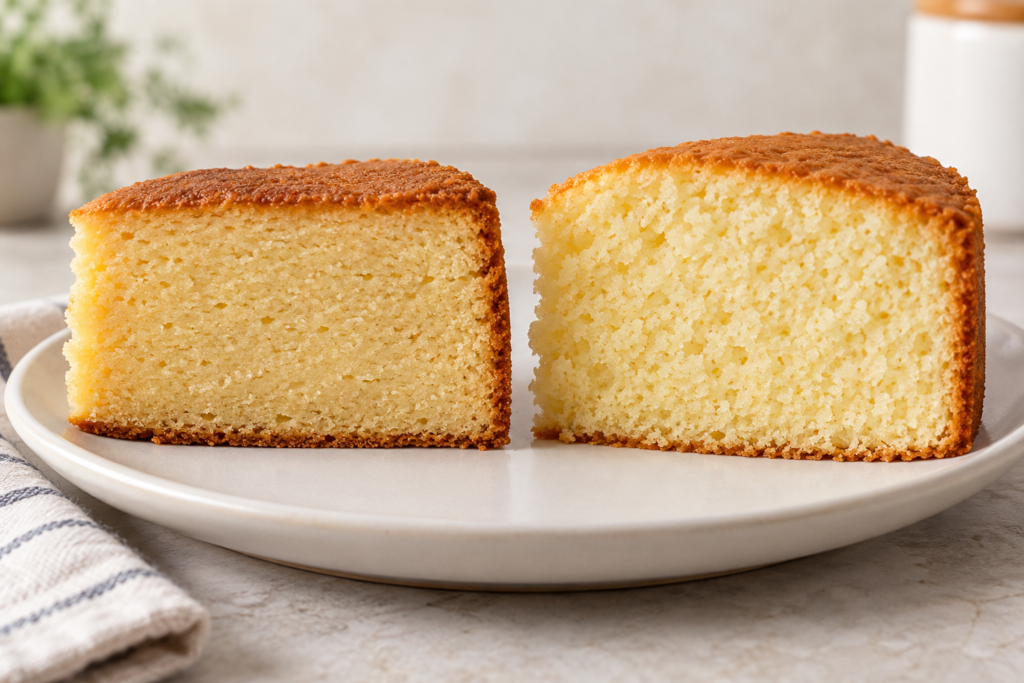
Start by looking at the texture. A cake that is moist and close-textured may simply be the style of cake you made. A cake that is rubbery, gummy or very heavy usually points to a measuring or mixing problem. This guide is about heavy, tight-crumb cakes. If your cake dipped in the center, see why did my cake sink in the middle instead.
The Quick Answer
For a lighter cake, weigh your flour, use fresh baking powder or baking soda, let cold ingredients warm up when the recipe asks, and mix for the time the recipe gives. Then bake in the right pan at the right temperature. Use this table to match what you see to the likely cause.
| What You Notice | Likely Cause | What to Try Next Time |
|---|---|---|
| Dry, heavy and crumbly | Too much flour or baked too long | Weigh the flour and start checking for doneness early |
| Tight, rubbery or chewy | Mixed too long after adding flour, or a high-protein flour | Mix only as long as the recipe says and use the flour it names |
| Heavy all the way through | Old baking powder or soda, or measuring errors | Test your leavener and weigh your ingredients |
| Gummy strip at the bottom | Mixing too short or too long, cold ingredients, or a cool oven | Follow the full mixing time and check your oven with a thermometer |
| Batter looked curdled and baked up uneven | Cold eggs or milk | Let ingredients come to room temperature first |
What a Dense Cake Looks and Feels Like
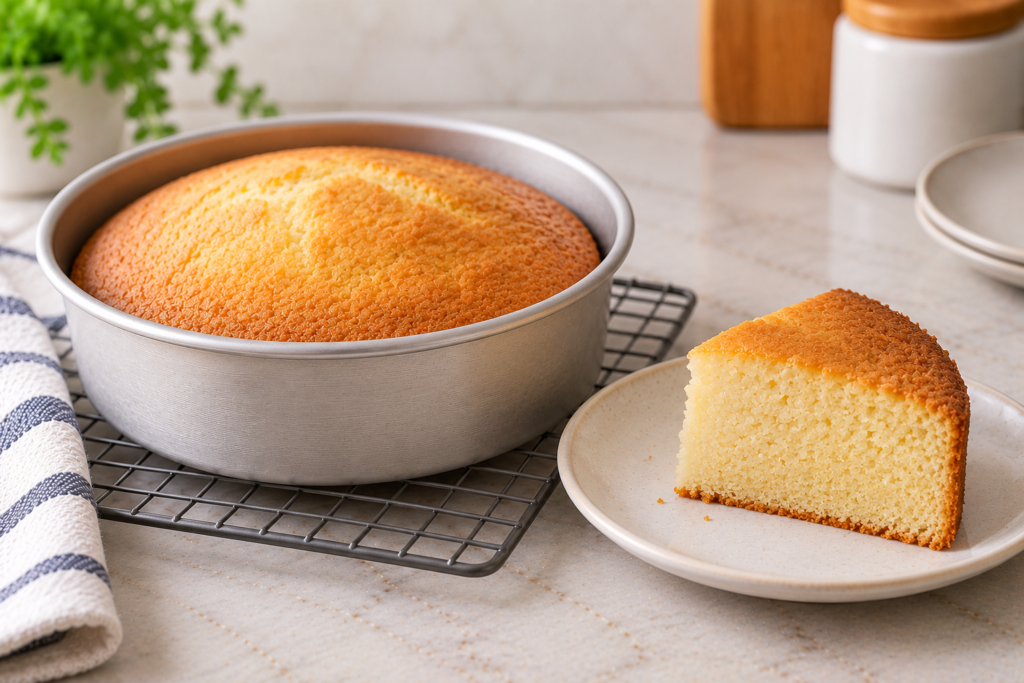
A dense cake has small, tightly packed holes instead of a soft, even crumb. It feels heavy for its size, slices with a rubbery pull, or has a damp, compact line near the bottom.
A tight crumb is not always a failure. Pound cake, banana cake and many oil-based cakes are meant to be close-textured. If yours is tender and tastes good, it may be exactly what the recipe intended.
Why Does Cake Turn Out Dense?
A good cake needs both air and structure. Mixing adds air, baking powder or soda makes gas, and eggs and flour set around those bubbles in the oven. If the batter holds too little air, makes too little gas, or turns tough, the cake bakes up heavy.
8 Reasons Your Cake Is Dense
1. You Used Too Much Flour
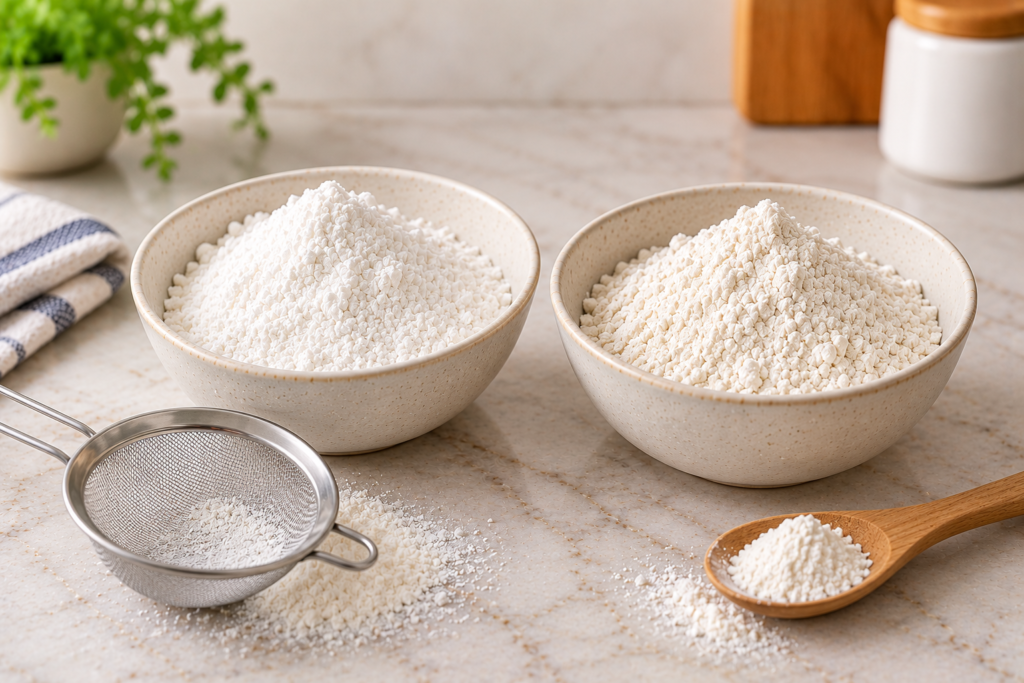
This is the easiest mistake to make with measuring cups. Scooping straight from the bag packs flour into the cup, so you add more than the recipe meant. Extra flour soaks up moisture and leaves the cake dry and heavy.
Fix: Use a digital scale and follow the gram weights in the recipe. No scale? Fluff the flour, spoon it into the cup, and level the top with a knife. Do not tap or press it down. Do not add extra flour just because the batter looks soft.

2. Your Baking Powder or Baking Soda Is Old
Baking powder and baking soda make the gas that lifts the batter. If they are old, stored somewhere damp, or measured wrong, the cake cannot rise properly and the crumb stays tight.
Fix: Do a quick test. Stir ½ teaspoon of baking powder into a little hot water, or add a pinch of baking soda to a spoonful of vinegar. If it does not fizz right away, replace it. Keep both sealed in a cool, dry cupboard. They cannot be swapped one for one, so use the one your recipe names.
3. You Mixed Too Much After Adding Flour
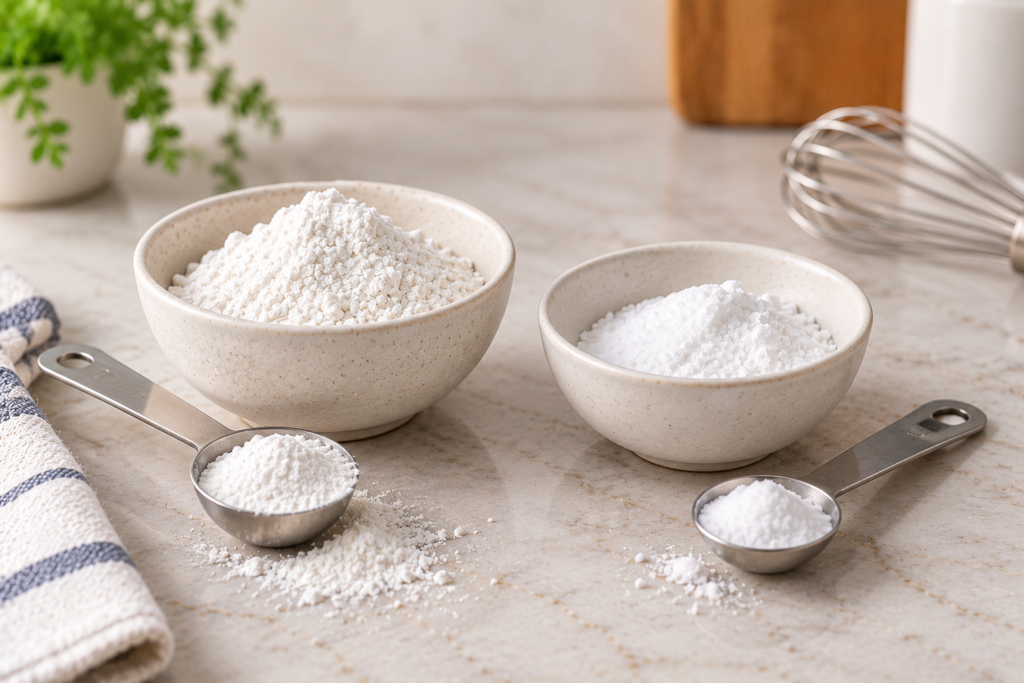
Once flour meets liquid, mixing builds gluten. A little gives the cake its shape. Too much makes it chewy and rubbery.
Fix: After the flour goes in, mix at the speed and for the time the recipe gives. Stop when no dry streaks remain. Scrape the bowl once so no flour hides at the bottom, but do not keep beating to make the batter perfectly smooth.
4. You Did Not Mix Enough
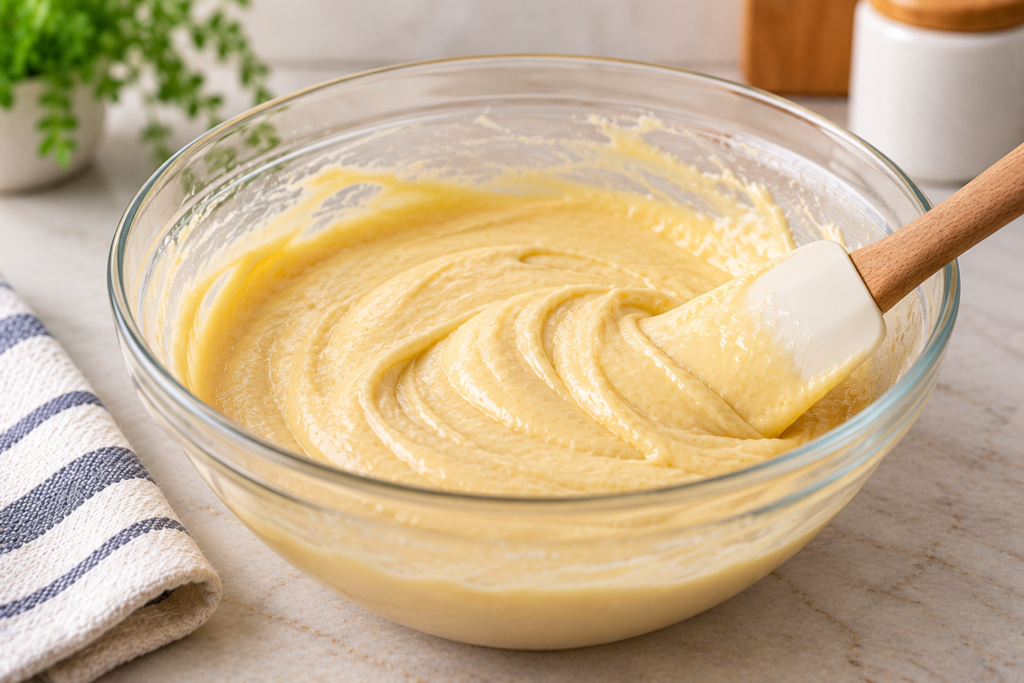
Being afraid of overmixing can cause the opposite problem. Some butter cakes, especially ones made with the reverse creaming method, need the full mixing time to build enough structure. Stopping too early can leave a dense, gummy layer at the bottom.
Fix: Mix for the full time the recipe gives, not just until things come together. Scrape the bottom of the bowl, then finish the last low-speed mix. This applies to mixer cakes. Simple stir-together cakes and airy sponge cakes made with whipped eggs need a much gentler hand.
5. Your Butter, Eggs or Milk Were Too Cold
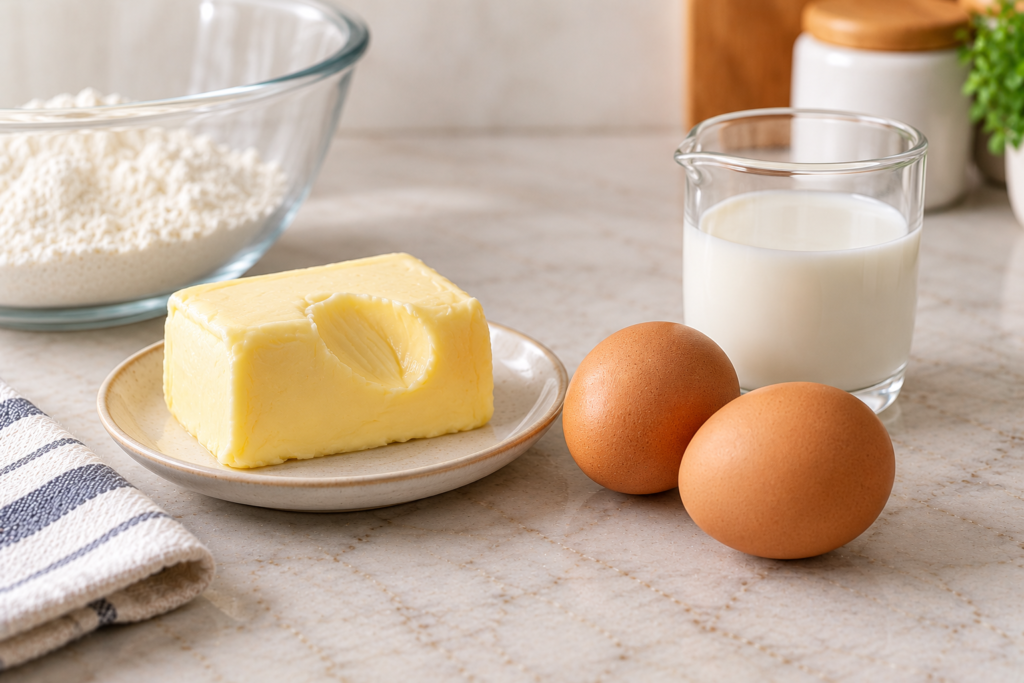
Cold butter does not hold air well when you beat it with sugar. Cold eggs or milk can make the butter mixture look curdled. Batter that does not blend smoothly bakes up uneven and heavy.
Fix: Set butter, eggs and milk out ahead of time. Softened butter should bend without breaking and still feel cool, around 65 to 68°F (18 to 20°C). It should never look greasy or melted. Eggs should not feel fridge-cold. If the batter looks a little curdled after the eggs, carry on with the next step. It usually comes together once the flour goes in.
6. You Changed the Flour or the Fat
Flours differ in how much protein they have and how much liquid they soak up. Bread flour in place of cake flour gives a chewier crumb. Swapping oil for butter or cutting the sugar also changes the texture, because each ingredient has a job in the batter.
Fix: Use the flour and fat the recipe names. If you must swap, use a conversion made for that swap and expect the texture to change a little. You will find an easy cake flour swap in the FAQs below.
7. Your Oven Was Too Cool or the Bake Time Was Off
A cake needs enough heat to rise and set at the right time. In a cool oven it sets too slowly and can bake up compact. Leaving it in too long dries it out, which also makes it feel heavy when you eat it.
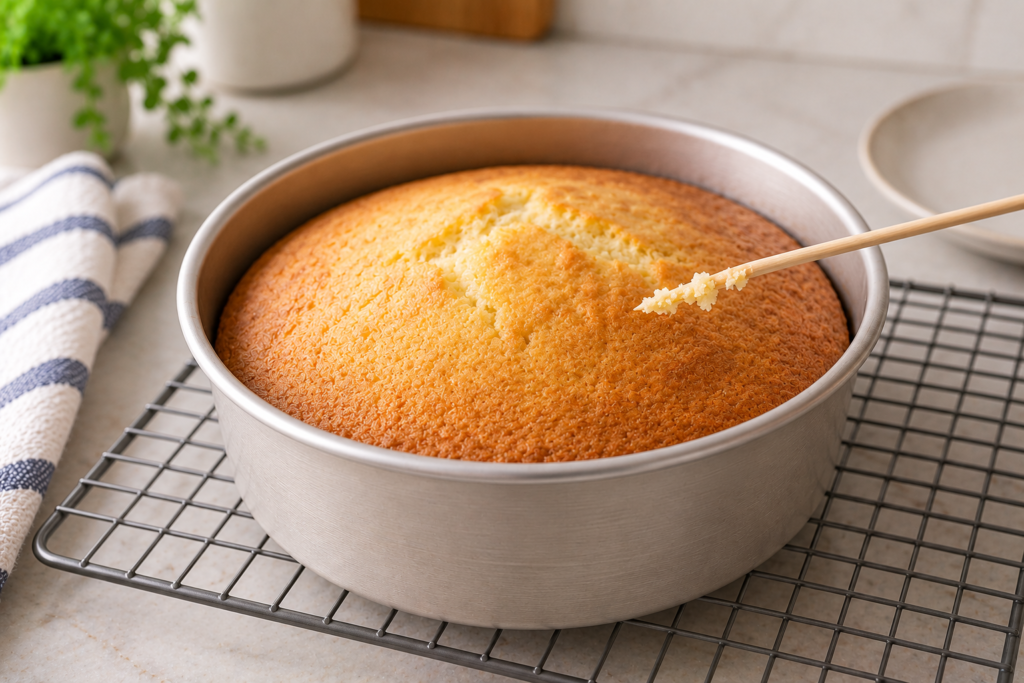
Fix: Preheat fully and use an oven thermometer, since many ovens run hotter or cooler than the dial says. Bake on the rack the recipe gives and start checking at the earliest time listed. A toothpick with a few moist crumbs means the cake is done. Wet batter means it needs more time.
One habit from my bakery days: always set a timer. If you forget the timer and the cake stays in the oven too long, it overbakes and dries out.
8. You Used the Wrong Pan
A pan that is too big spreads the batter thin, so it bakes faster and drier. A pan that is too small makes the center slow to set. Dark metal, glass and light metal pans also heat differently.
Fix: Use the pan size and type the recipe gives. If you must swap, pick one that holds about the same amount of batter and keep an eye on the bake time. Do not fill the pan higher than the recipe says.
How to Prevent a Dense Cake Step by Step
- Read the whole recipe first. Note the flour type, ingredient temperatures, pan size, oven temperature and mixing times.
- Weigh your flour, sugar and leaveners in grams if you can. Set the scale back to zero before each one.
- Grease the pan and preheat the oven before you mix, so the batter can go in as soon as it is ready.
- If the recipe says to cream the butter and sugar, beat until pale and fluffy. This often takes 3 to 5 minutes. Add the eggs one at a time and scrape the bowl.
- Once the flour goes in, mix at the speed and for the time given. When folding, lift batter from the bottom with a spatula and turn it over the top instead of stirring hard.
- Start checking for doneness at the earliest time, then cool the cake as the recipe says before slicing or frosting.
- If you like, jot down your flour, pan, oven setting and mixing time. Next time, change just one thing so you can see what helped.
Can You Fix a Dense Cake After Baking?
You cannot make a baked cake light again, but you can make it nicer to eat. If it is a little dry, brush the cut layers with simple syrup (there is an easy recipe below), or serve slices with fruit, whipped cream or a sauce.
If the center is wet or raw, the cake is underbaked, not just dense. Do not serve it as if it were finished.
For your next bake, do not add random extra baking powder or liquid. Use the table above to find the likely cause and change that one thing.
Flour and Fat Notes
Cake flour gives a finer, softer crumb in recipes written for it. All-purpose flour works well in the many cakes designed around it. Bread flour is not a good stand-in for cake flour when you want a tender cake.
Oil cakes tend to feel moist and rich. Butter cakes can be lighter when the butter and sugar are creamed well. Neither is better, so use the one your recipe calls for. For dairy-free or egg-free cakes, start with a recipe made that way, like our eggless chocolate cake, instead of swapping ingredients yourself.
Make-Ahead and Storage
Let the cake cool completely before you wrap it. As a general guide, unfrosted layers wrapped tightly in plastic wrap keep for 1 to 2 days at cool room temperature. For longer, freeze the wrapped layers. They are usually best within about 2 to 3 months. Thaw them still wrapped so they stay moist.
Frostings made with cream cheese, whipped cream or other perishable ingredients need to be kept in the refrigerator. Do not leave a cake with these frostings at room temperature for more than about 2 hours.
Simple Syrup for a Slightly Dry Cake
If your cake came out a little dry or dense, a light brush of simple syrup can make each slice feel softer and more moist. This basic syrup uses equal parts sugar and water and takes only a few minutes on the stove.
Simple Syrup for Moistening Cake
Ingredients
Equipment
Method
- Put the sugar and water in a small saucepan over medium heat.
- Stir gently until the sugar has fully dissolved and the liquid looks clear. Let it come to a gentle simmer, then take it off the heat. There is no need to boil it for long.
- Stir in the vanilla, if using. Let the syrup cool to room temperature, about 30 minutes.
- Brush a thin layer over the cut or top surfaces of the cooled cake. Start with a little, wait a minute for it to soak in, and add more only if the cake still feels dry.
- Pour any leftover syrup into a clean jar, cover, and refrigerate.
Notes
Frequently Asked Questions
Why Is My Cake Dense but Still Moist?
Cakes with a lot of fruit, oil, yogurt or other wet ingredients are often moist and dense by design. Carrot cake and banana cake are good examples. It is only a problem if the crumb is gummy or there is a wet, packed layer.
Does Overmixing Always Make Cake Dense?
No. Overmixing usually makes cake tough and chewy more than heavy. Undermixing can cause density too, which is why the recipe’s mixing time matters more than a “mix as little as possible” rule.
Can Too Much Sugar Make a Cake Dense?
Sugar keeps cake tender and helps the butter hold air during creaming. Too much can make the cake heavy and sticky, and it may sink. Too little can make it dry and tough. If you want to cut sugar, look for a recipe written with less sugar rather than cutting it a lot yourself.
Will More Baking Powder Make My Cake Lighter?
Usually not. Too much makes the bubbles grow too big and pop, so the cake can rise fast, then fall and turn coarse or dense. It can also taste bitter or soapy. Use the amount in the recipe and make sure it is fresh.
Can I Use All-Purpose Flour Instead of Cake Flour?
Yes, with a simple swap. For each cup of cake flour, measure 1 cup of all-purpose flour, take out 2 tablespoons, and add 2 tablespoons of cornstarch. Sift them together twice. The crumb will be close to cake flour, though not exactly the same.
Why Is the Bottom of My Cake Dense?
A dense or gummy band at the bottom often means the batter was not fully mixed, so heavier ingredients settled. Cold ingredients, too much liquid or an oven that runs cool can also cause it. Scrape the very bottom of the bowl before the last mix.
Should I Throw Away a Dense Cake?
Not if it is fully baked. Cube it for a trifle, or crumble it and mix it with a little frosting to make cake pops. If the center is raw, do not serve it.
The Takeaway
A dense cake usually leaves clues. Weigh your flour, check that your leavener is fresh, use ingredients at the right temperature, mix for the time the recipe gives, and bake in the right pan. Find the one cause that matches your cake and fix that first.