
If you are asking, “Why is my cream cheese frosting runny?”, take a breath before you reach for more powdered sugar. A loose frosting usually means the cheese was too soft, the mixture got warm, or it was mixed for longer than it needed. The good news is that you can often rescue it without starting over.
Good cream cheese frosting is smooth and creamy, but it still sits in a soft mound on a spoon. For spreading it can be a little softer. For piping it needs to be cooler and firmer. Use the quick guide below to work out what your bowl needs first.
| What you see | Likely cause | Try this first |
|---|---|---|
| Glossy frosting that slumps off a spoon | Warm ingredients or a warm kitchen | Chill 20 to 30 minutes, then stir gently |
| Loose from the moment you mix it | Tub-style or reduced-fat cream cheese | Chill it, and use block cream cheese next time |
| It turned thinner while beating | Overmixing, or the cream cheese got too soft | Stop the mixer and refrigerate briefly |
| Runny after adding liquid or flavoring | Too much moisture | Stop adding liquid, chill and check again |
| Frosting slides on the cake | Warm cake or soft frosting | Cool the cake completely and chill the frosting |
One useful rule: change one thing at a time. If you add sugar, butter and extra chilling all at once, you will never know which one helped.
Why Is My Cream Cheese Frosting Runny? 6 Common Causes
1. You Used Spreadable Cream Cheese From a Tub
Tub cream cheese is made to spread easily, so it is softer than the cream cheese sold in a firm block, and some kinds hold more moisture. That softness carries straight into your frosting, which then never quite holds its shape. For frosting, choose full-fat block cream cheese unless your recipe says otherwise. There is more on the difference further down.
2. The Cream Cheese or Butter Was Too Warm
Butter and cream cheese should be soft enough to mix smoothly, but not warm, shiny or close to melting. A warm bowl, a sunny counter or a hot day can soften them faster than you expect. If your frosting was thick at first and then started to slump, temperature is the first thing to suspect.
3. You Beat the Frosting for Too Long
Cream cheese frosting is not handled like a fluffy buttercream. Long beating warms the mixture and loosens it, especially after the sugar has gone in. Mix only until everything looks smooth and combined. If you keep beating to make it fluffier, it usually gets softer instead.
4. You Added Too Much Liquid
Milk, cream, lemon juice, fruit puree and liquid flavorings all loosen frosting, and even a small splash matters when the frosting is already soft. Cream cheese frosting rarely needs milk or cream to become spreadable. For flavor, use a small amount of extract or finely grated zest instead of pouring in liquid.
5. The Cake Was Still Warm
A warm cake softens the frosting from underneath. A firm bowl of frosting can still slide down the sides or turn wet-looking in patches. Let the layers cool completely on a rack before you frost them. If you are short on time, move them to the refrigerator once they have stopped steaming.
6. The Ingredient Balance Was Off
Cream cheese frosting depends on a balance between the moisture in the cheese, the fat in the butter and the powdered sugar. Too little sugar for the amount of cheese leaves it soft, and cup measurements vary a lot depending on how tightly the sugar is packed. Use a reliable recipe and weigh your ingredients when you can.
How to Fix Runny Cream Cheese Frosting
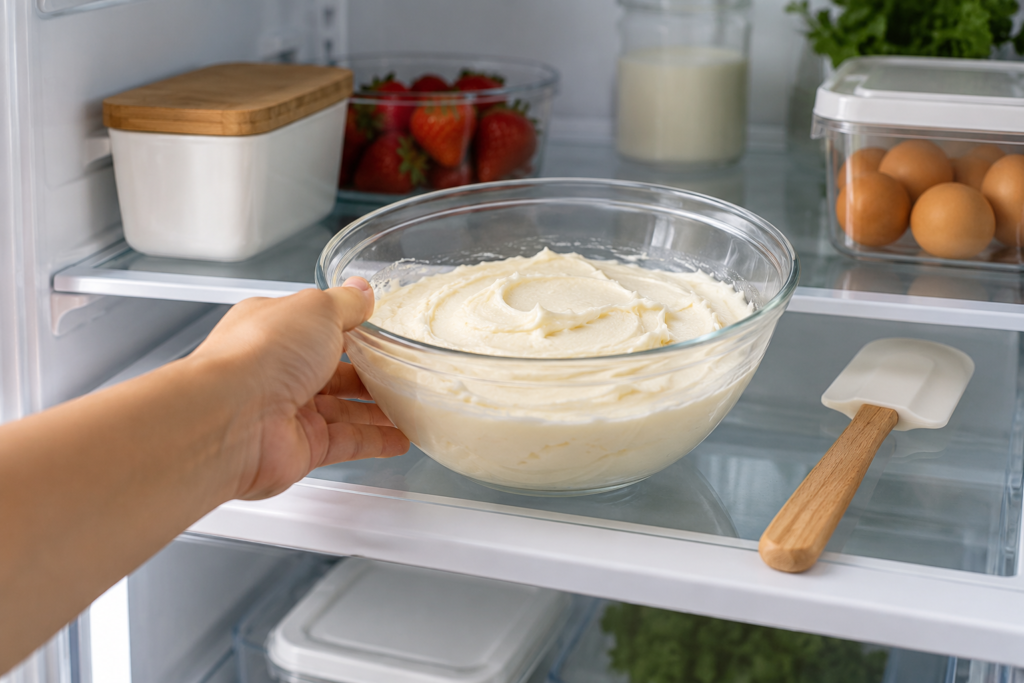
Start by stopping the mixer. Scrape down the bowl, cover it and refrigerate the frosting for 20 to 30 minutes. Then stir it gently by hand and see whether a spoonful holds its shape. If it is still loose, pick the fix that matches the likely cause.
Fix 1: Chill It Before You Change the Recipe
Chilling is the best first step when the frosting has turned warm or soft. The butter firms up as it cools, which gives the frosting more body. After chilling, fold or stir just enough to even out the texture. If it is still too soft, chill for another 10 to 15 minutes and check again.
Fix 2: Add Powdered Sugar a Little at a Time
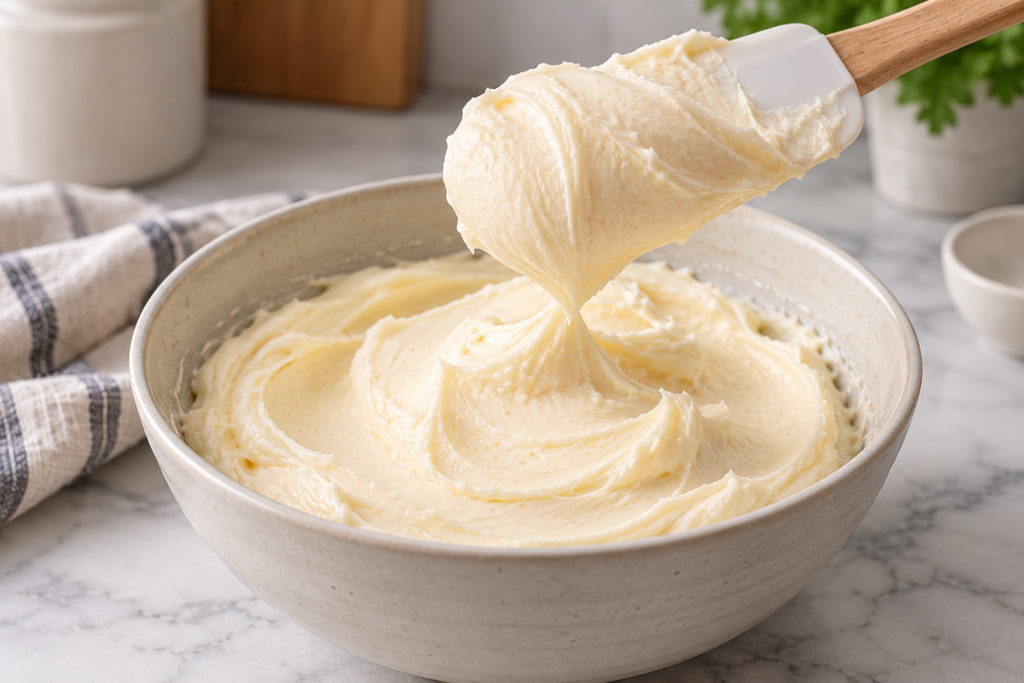
If the frosting is only slightly loose and not watery, add sifted powdered sugar in small amounts, about 10 to 15 g (1 to 2 tablespoons) at a time. Mix on low speed or stir by hand, then stop and check before adding more.
Stop when it holds a soft mound. If it is still runny after several additions, more sugar is not the answer. It will only make the frosting heavy and very sweet.
Fix 3: Mix It Into a Firmer Fresh Batch
If you used tub cream cheese or added too much liquid, chilling alone may not be enough. One practical rescue is to make a small amount of fresh frosting with block cream cheese and butter, then mix the loose frosting into it a little at a time. This raises the share of firm ingredients. It also gives you a bigger batch, so plan for extra.
If the frosting smells unusual or has been sitting at room temperature for a long time, do not try to rescue it. Throw it away and start fresh.
If your problem is a butter-based frosting rather than cream cheese frosting, see our guide on how to fix runny buttercream for fixes that suit that style.
How to Thicken Cream Cheese Frosting Without Powdered Sugar
If the frosting is already sweet enough, chilling is your best tool. It changes the firmness without changing the taste, and it is often all a slightly warm frosting needs.
For frosting that stays loose, a little extra butter can help. Beat a small piece of cool, softened butter in a separate bowl until creamy, then mix in the loose frosting a spoonful at a time. This makes the frosting richer and a little less tangy, so use it only when the frosting really needs more structure.
Do not add flour or cornstarch straight to the bowl. They can leave a powdery texture and they are not a reliable fix for a wet frosting. And if you want a less sweet frosting from the start, choose a recipe written that way. Powdered sugar gives structure as well as sweetness, so simply leaving some out of a standard recipe makes it softer.
How to Thicken Cream Cheese Frosting for Piping
Piped swirls need more definition than a simple cake coating. Use full-fat block cream cheese, leave out extra liquid and stop mixing as soon as the frosting is smooth. A large star tip is more forgiving than a small one when you are starting out.

Once mixed, refrigerate the frosting for 15 to 20 minutes. If you have already filled a piping bag, chill the bag briefly and pipe one test swirl on a plate before you decorate the whole cake. The ridges from the tip should stay sharp and not slowly flatten.
Cream cheese frosting softens at room temperature, so it is not the best choice for very detailed decorations that must sit in a warm room for hours. Keep the finished cake in the refrigerator and bring it out close to serving time.
For a classic pairing, try cream cheese frosting on our carrot cake or red velvet cake.
Block Cream Cheese vs. Spreadable Tub Cream Cheese
For frosting, the firm block is almost always the better choice. It is denser, so the frosting spreads neatly and holds a piped shape. Let it soften only enough to blend smoothly.
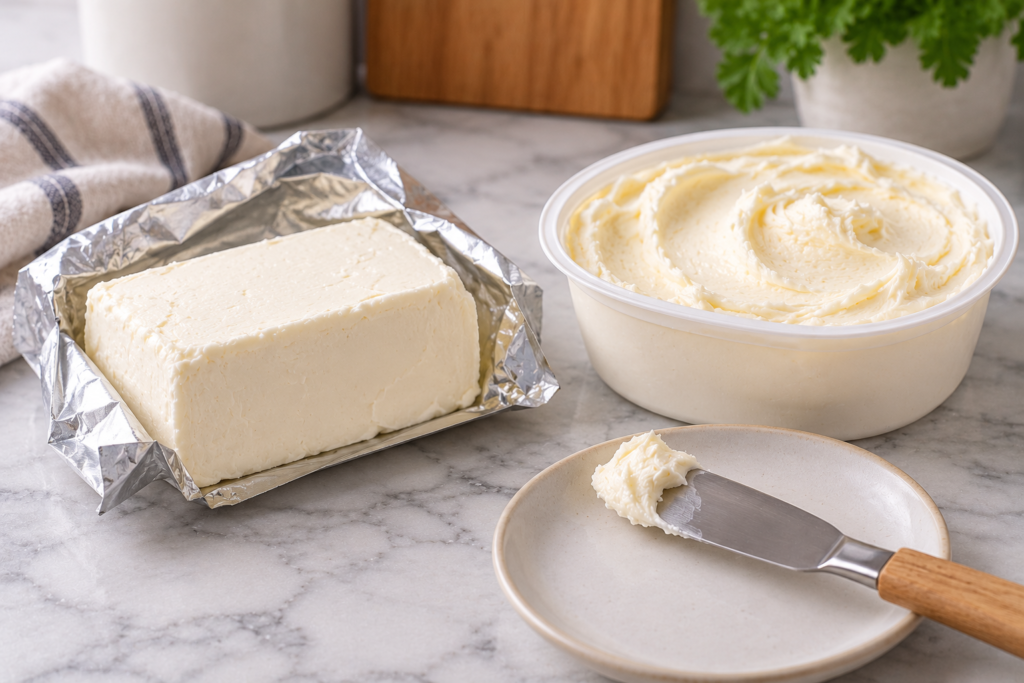
Tub cream cheese is designed to be soft straight from the refrigerator. Whipped and reduced-fat kinds are even less suitable for a recipe written for a block, because they add softness or moisture that powdered sugar cannot fully correct.
Read the package carefully. You want plain, full-fat block cream cheese, not cream cheese spread, whipped cream cheese or a flavored kind. If a tub is all you can find, look for a frosting recipe developed for it, because the same quantities will not behave the same way.
How to Prevent Runny Cream Cheese Frosting Next Time
- Start with the right cheese. Use full-fat block cream cheese, and check that the package does not say whipped or spreadable.
- Keep ingredients cool but workable. Butter should give when pressed without looking greasy. Cream cheese should be cool and firm enough to cut cleanly.
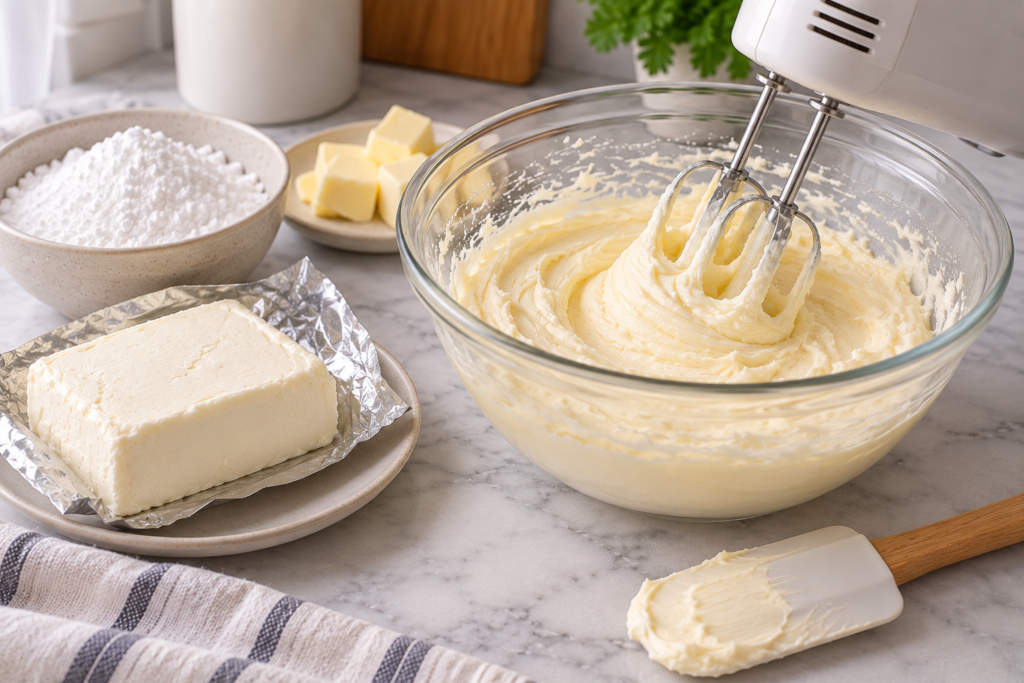
- Mix in the right order. Beat the butter until creamy first. Add the cream cheese and mix only until smooth, then add sifted powdered sugar gradually on low speed.
- Leave out extra liquid. Add vanilla carefully, and do not add milk unless the recipe asks for it.
- Frost a completely cool cake. Warm layers undo the texture you worked for in the bowl.
- Plan for a warm kitchen. Work in smaller batches and put the bowl back in the refrigerator whenever the frosting starts to soften.
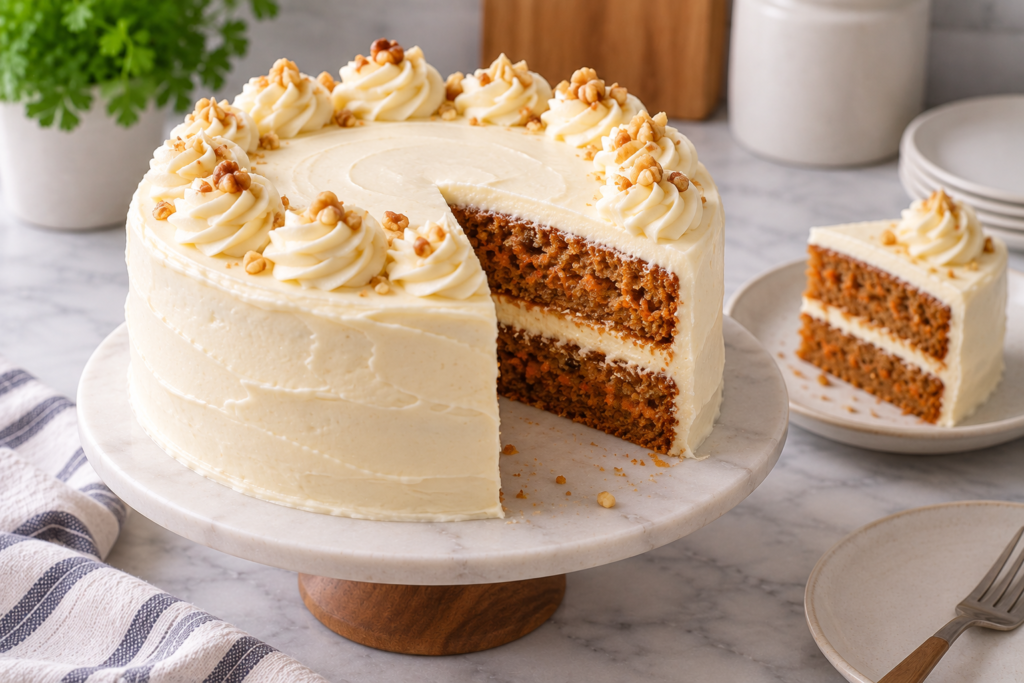
A Basic Cream Cheese Frosting That Holds Its Shape
If you would rather begin again with a fresh batch, this simple recipe follows every habit above: block cream cheese, cool butter, short mixing and no added liquid. It also works well on our easy strawberry cake.
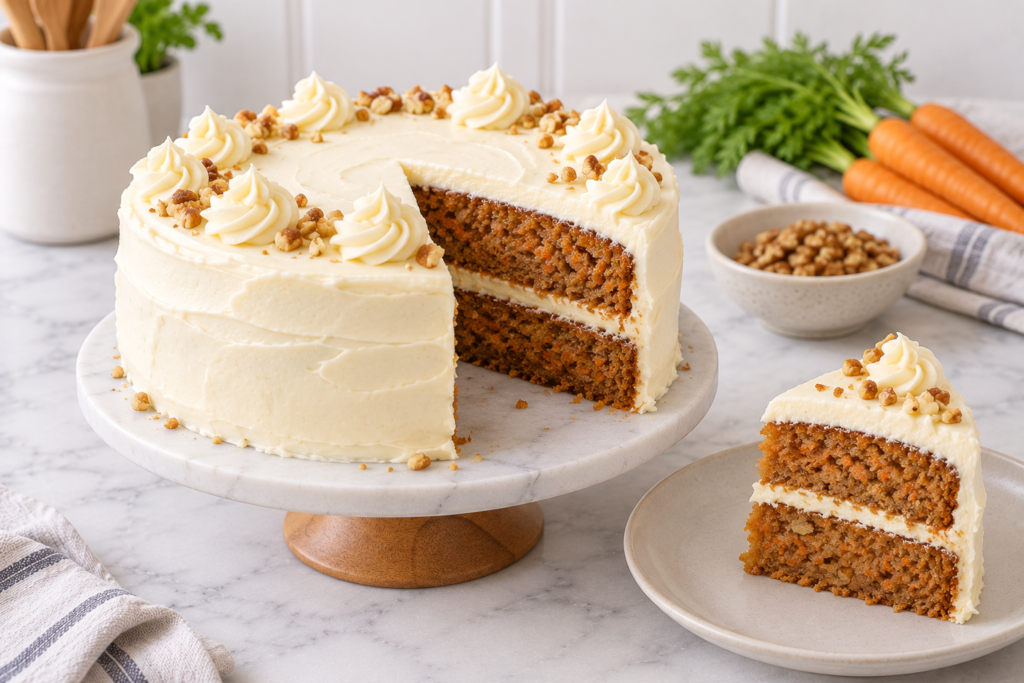
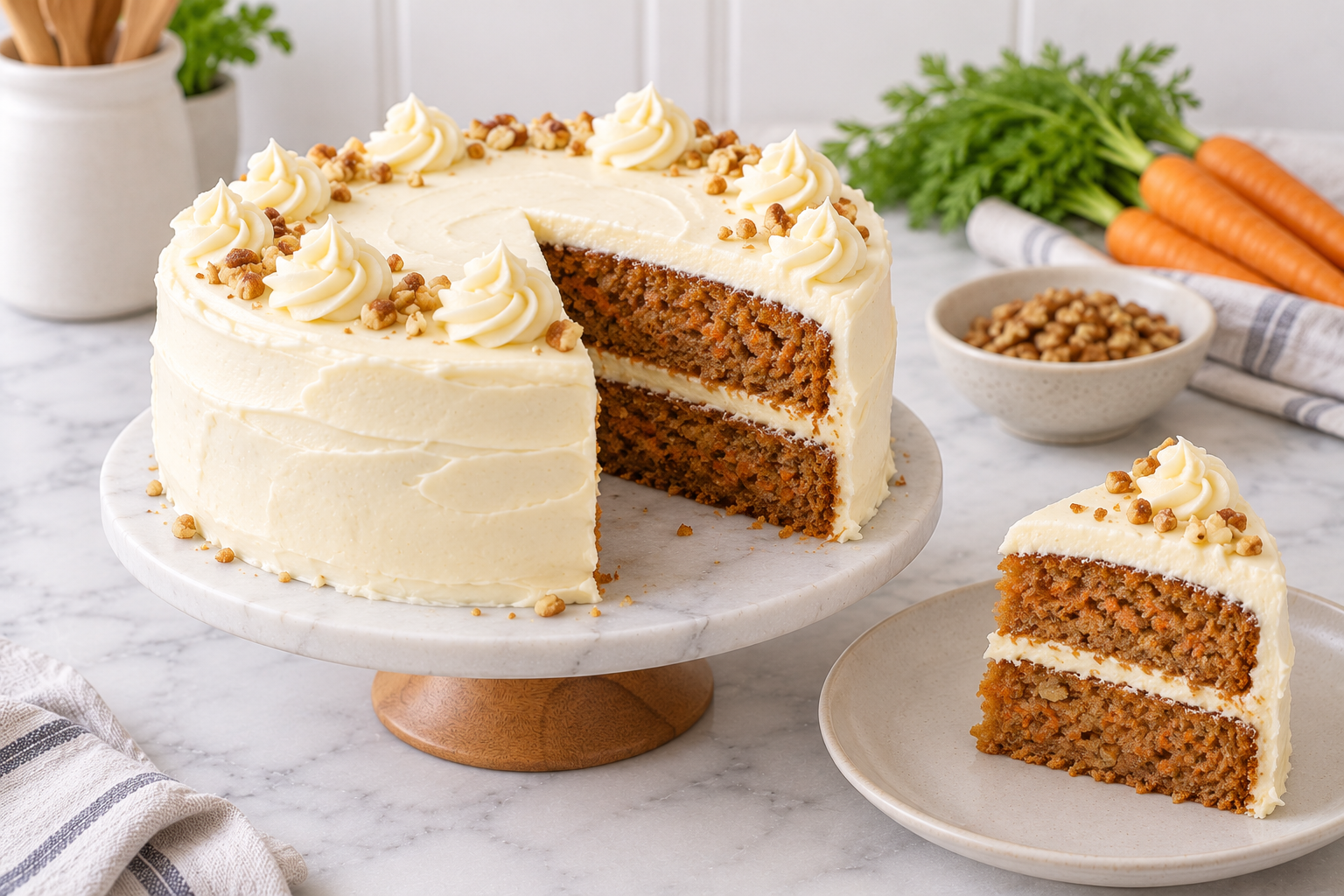
Basic Cream Cheese Frosting (That Holds Its Shape)
Ingredients
Equipment
Method
- Beat the butter on medium speed for 1 to 2 minutes, until creamy and smooth. Scrape down the sides of the bowl.
- Add the cream cheese and mix on low to medium-low just until smooth, about 20 to 30 seconds. Do not keep beating.
- Add the 360 g (3 cups) of powdered sugar in two or three additions, mixing on low speed after each one. Add the vanilla and the salt, if using.
- Check the texture. The frosting should hold a soft mound on a spoon. If it is too soft, refrigerate it for 15 to 20 minutes before you add any more sugar.
- If it still needs more body, add the extra powdered sugar a tablespoon at a time, mixing briefly after each addition. Stop as soon as it is thick enough.
- For piping, chill the finished frosting for 15 to 20 minutes, then fill the piping bag and test one swirl. Frost only completely cooled cake or cupcakes.
Notes
Frequently Asked Questions
Can I fix runny cream cheese frosting by putting it in the freezer?
Use the refrigerator first, because it cools the frosting more evenly. A very short freezer chill can work in a pinch, but check it every few minutes and stir gently so the edges do not freeze solid while the middle stays soft.
Will runny cream cheese frosting get thicker overnight?
It will firm up in the refrigerator as the butter cools. But chilling cannot correct too much moisture or the wrong kind of cream cheese. Store it covered and check the texture before you use it.
Can I use cornstarch to thicken cream cheese frosting?
It is not a good first choice. Dry cornstarch can leave a starchy, powdery feel, and it does not deal with the extra moisture that is making the frosting run. Chill first, then adjust with a little powdered sugar if you need to.
Why did my cream cheese frosting turn runny after I added powdered sugar?
Sugar can draw moisture out of the cream cheese as it dissolves, so the frosting may loosen for a while after the sugar goes in. It is more likely if the mixture was already warm or was beaten for a long time. Stop mixing and chill it before you decide whether it needs more sugar.
Can I leave cream cheese frosting out overnight?
No. Because it contains cream cheese, keep the frosting and anything frosted with it in the refrigerator. As a general food-safety rule, perishable foods should not sit at room temperature for more than about 2 hours.
Can I pipe cream cheese frosting on cupcakes?
Yes, as long as it is made with firm block cream cheese, mixed briefly and chilled until it holds its shape. Pipe a test swirl first, and keep the cupcakes refrigerated until you serve them.
What is the best consistency for cream cheese frosting?
For spreading, it should be smooth and easy to move with a spatula without running off the cake. For piping, it should hold clear ridges and a soft peak. It should never look watery, glossy or melted.
The Takeaway
Runny cream cheese frosting is nearly always about soft cheese, warmth or too much mixing. Chill it first, stir gently, and make one small change at a time. Next time, start with a cold block of full-fat cream cheese and stop the mixer early, and your frosting will hold its shape.